Holiday Inn Johannesburg Airport
December 7 & 8,
We flew on Lufthansa from Vancouver to Munich and then on to Johannesburg. Each leg was nearly ten hours long, with a nine-hour layover in Munich.
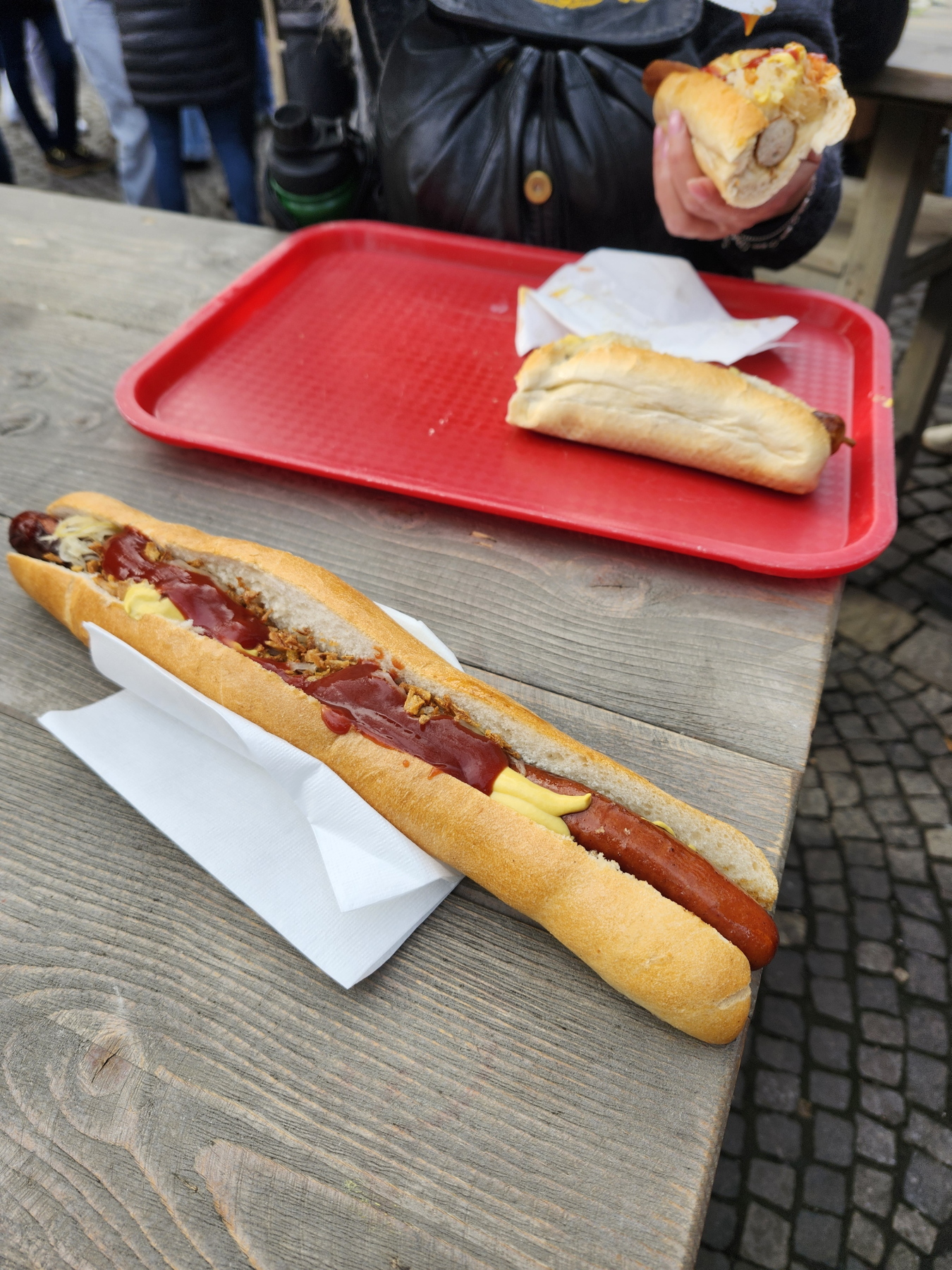
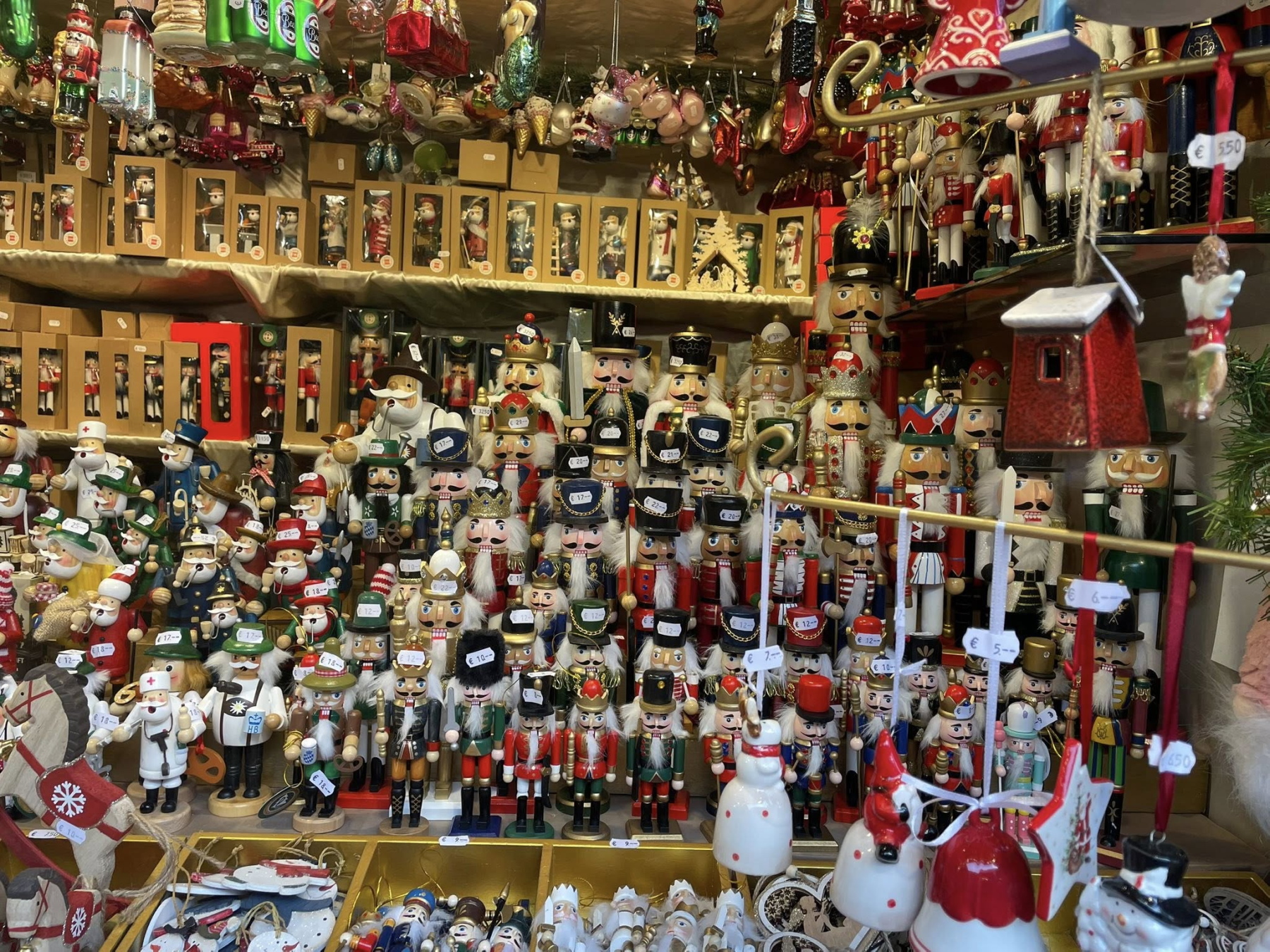
Since we found ourselves in Munich at Christmastime, we decided to make the most of our long break and visit the Christmas market at Marienplatz. We took the train downtown and arrived at the Glockenspiel just in time for its noon performance. Marienplatz was packed—uncomfortably crowded, in fact—with a forest of phones raised to record the show. I don’t think I’ve been in a crowd that dense since I was a young teenager with my parents at the Scoppio del Carro on Easter Sunday at the Duomo in Florence. Still, we managed to enjoy bratwurst and hot chocolate afterwards in a slightly quieter nearby square before heading back to the airport.
I visited Senegal two years ago to do some consulting for a South African engineering firm. We’ve kept in touch, and Drew arranged to meet us during our day in Joburg—or Jozi. We spent a very pleasant afternoon with his family at home, but he first took us to the Apartheid Museum, which was excellent and deeply sobering. I think I mentioned on our Peru trip that we Europeans have a lot to answer for. That’s certainly true in South Africa as well: centuries of slavery, followed by the discovery of gold and diamonds, all culminating in the formal entrenchment of apartheid.
The words of the South African Constitution’s preamble are displayed—dignified, hopeful, and surprisingly moving to read in that setting:
“We, the people of South Africa,
Recognise the injustices of our past;
Honour those who suffered for justice and freedom in our land;
Respect those who have worked to build and develop our country; and
Believe that South Africa belongs to all who live in it, united in our diversity.
We therefore, through our freely elected representatives, adopt this Constitution as the supreme law of the Republic so as to:
• Heal the divisions of the past and establish a society based on democratic values, social justice and fundamental human rights;
• Lay the foundations for a democratic and open society in which government is based on the will of the people and every citizen is equally protected by law;
• Improve the quality of life of all citizens and free the potential of each person; and
• Build a united and democratic South Africa able to take its rightful place as a sovereign state in the family of nations.
May God protect our people.
Nkosi Sikelel’ iAfrika. Morena boloka setjhaba sa heso.
God seën Suid-Afrika. God bless South Africa.
Mudzimu fhatutshedza Afrika. Hosi katekisa Afrika.”
Reading those words, and then stepping through the exhibits that document how far the country had to climb to reach them, was powerful.
What struck me most were the unsettling parallels between South Africa in 1948 when apartheid was rapidly legislated, and aspects of the current political climate in the United States. This is not a claim that the U.S. is an apartheid state, but rather a comparison of how quickly a country’s direction can be changed following an election. In both cases, a very narrow win of the democratic mandate was followed by swiftly implemented & sweeping changes. This was done through legislation in South Africa’s case and through executive orders and executive appointments in the U.S. South Africa passed over 200 laws in its first year to formalize apartheid; the U.S. has seen a comparable pace of structural change through a similar numbers of executive orders. Segregation determined who was ‘in’ and who was ‘out ‘ in South Africa. In the US, it is non-DEI, non-immigrant, and loyalty to the President. While policing was already discriminatory in South Africa, the election of 1948 solidified a shift toward a brutal state-sponsored, white-minority regime that relied on the police to enforce strict racial separation. In the US, they have ICE. My concern in the US is that these changes appear to be outpacing, and in some cases bypassing, democratic consent and institutional safeguards. Scary considering South Africa required more than forty years to dismantle apartheid. The social and institutional damage caused by those 1948 decisions persists to a degree to this day.
Sorry. I do tend to go off on tangents but the current state of the world framed my tour of the apartheid museum. It’s still a great museum.
We’re off to Hoedspruit and Kruger Park tomorrow for the first of our safaris.



Privilege to hang out