Poreč
3 Nov –8 Nov 2026
We travelled from Ljubljana to Poreč, where we will spend the next five days based in one hotel while exploring the west coast of Istria by bus. A welcome change from packing and unpacking every day!
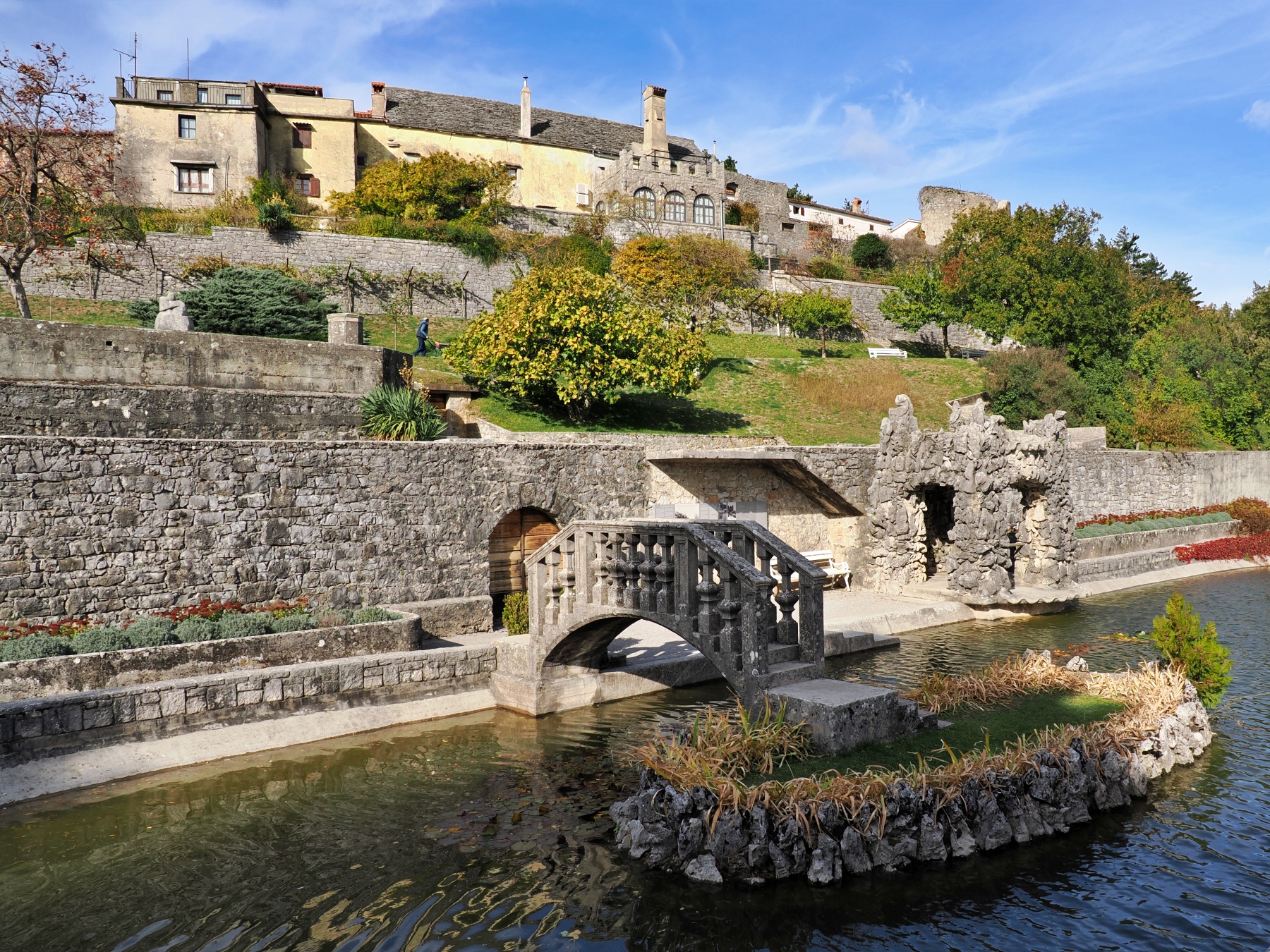
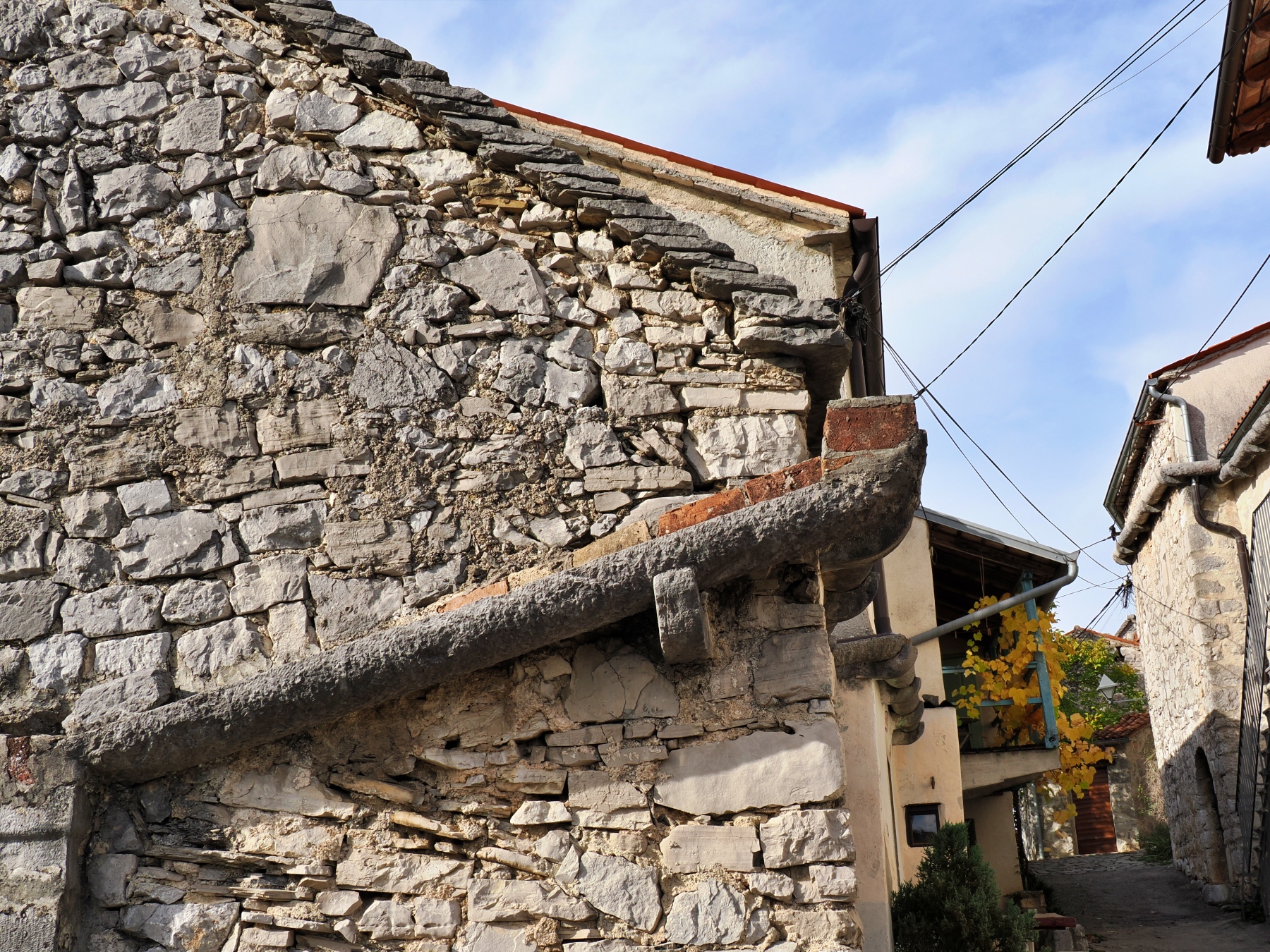
Our first stop along the way was the small medieval hilltop town of Štanjel (St. Daniel). It’s a charming old stone village, best known for its Ferrari Gardens (no relation to Enzo), the various sculptures left by the small artist community that occupied the town after the Second World War, and, somewhat less conventionally, the stone eavestroughs and downspouts on one of the buildings.
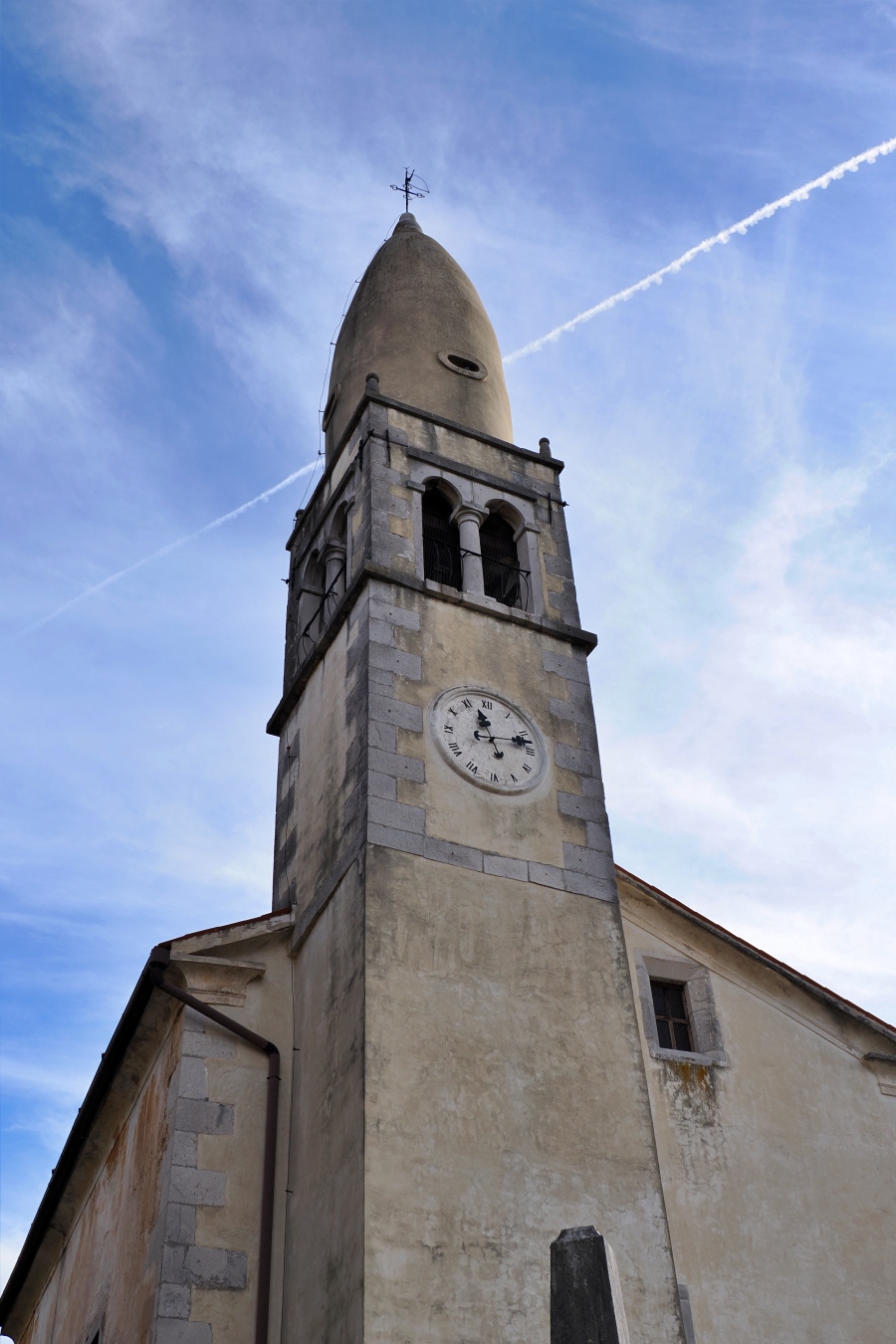
The area is notorious for the Bura, a powerful, cold northeasterly wind that sweeps down from the mountains. We didn’t need much of an explanation of what that meant because we got a demonstration. Wow, was it windy! There are several theories about why the village church steeple was rebuilt in the 1600s with its distinctive lemon-shaped top. One theory is that the unusual shape was designed to offer less resistance to the wind. That seems entirely reasonable, particularly after experiencing the Bura firsthand.
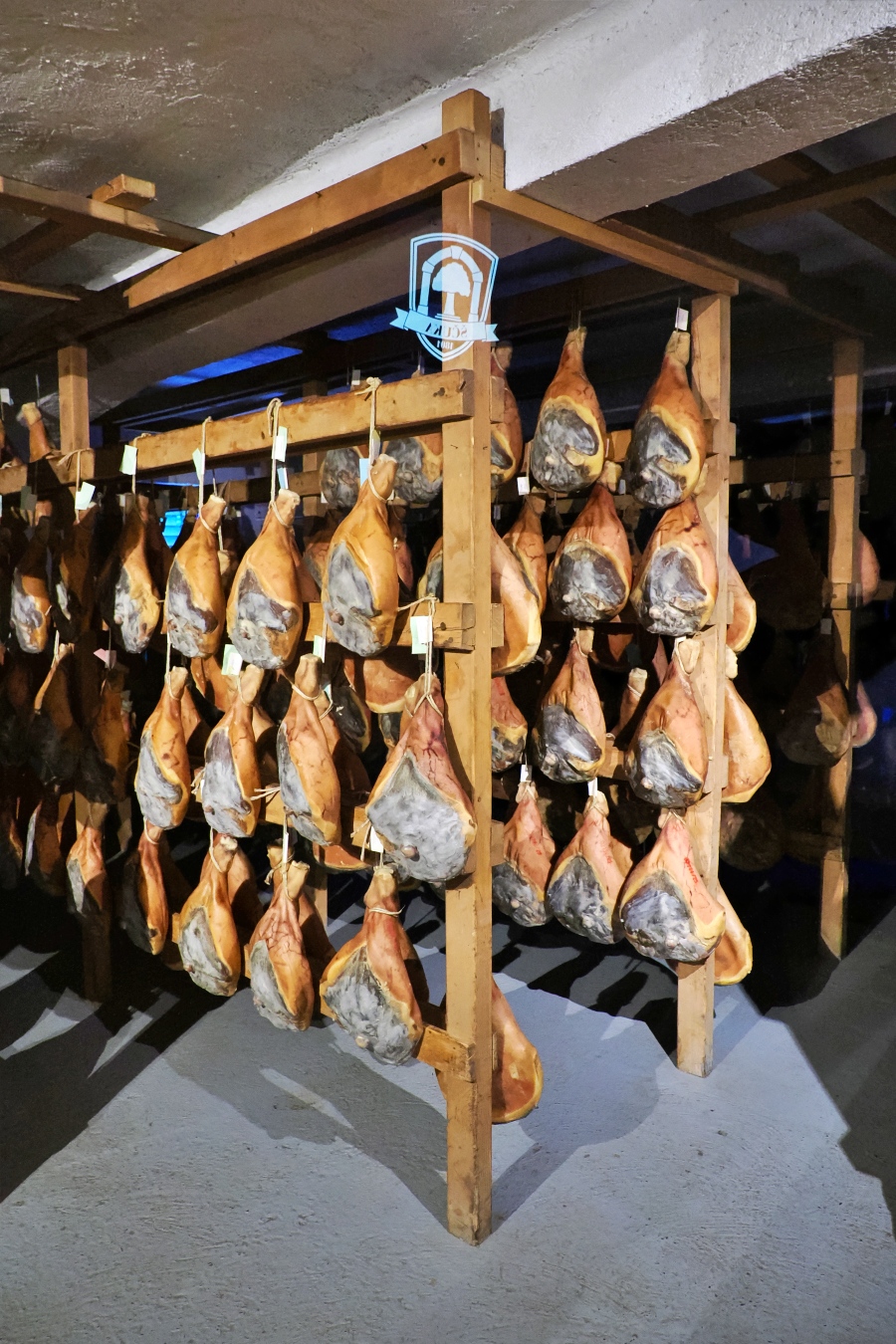
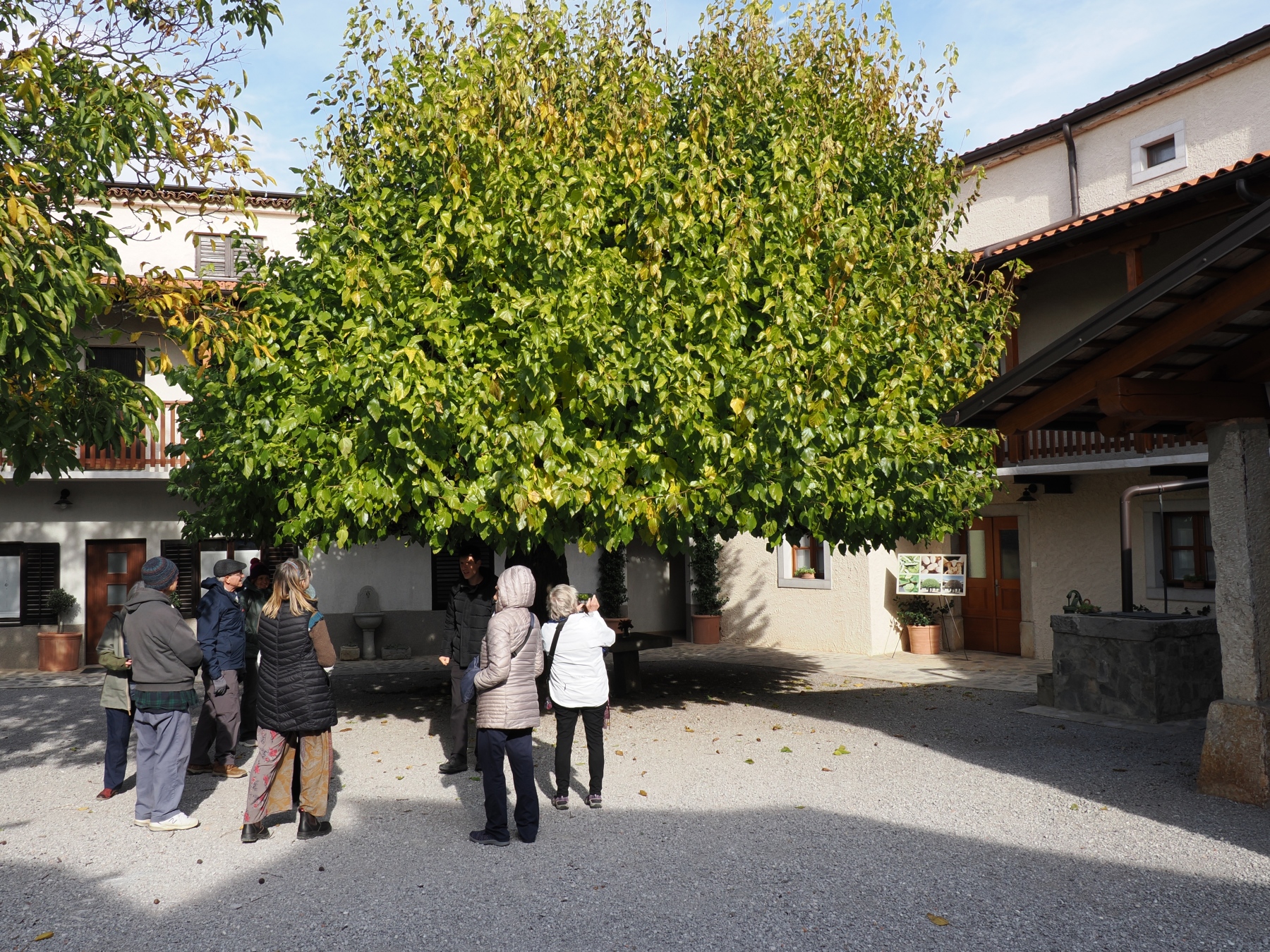
From Štanjel, we continued to a nearby prosciutteria operated by the Ščuka family, where we learned something about the traditional production of Istrian prosciutto. Depending on the size of the leg, the ham is salted, cured and then dried (in the Bura wind!) for one, two or even three years. By the time it’s ready, it has lost approximately 35% of its original weight.
Naturally, the visit concluded with lunch. We sampled prosciutto of different ages, accompanied by olives, local cheeses and fresh bread, all washed down with Teran, the region’s distinctive red wine.
Dinner was at Konoba Monika. A konoba is a traditional, often family-run restaurant. I couldn’t tell much about the building because it was dark and we arrived by bus, but it was very small and seemed to be little more than a house in a residential neighbourhood. We had ox goulash, apparently a local delicacy, and pasta with truffle sauce. Excellent!
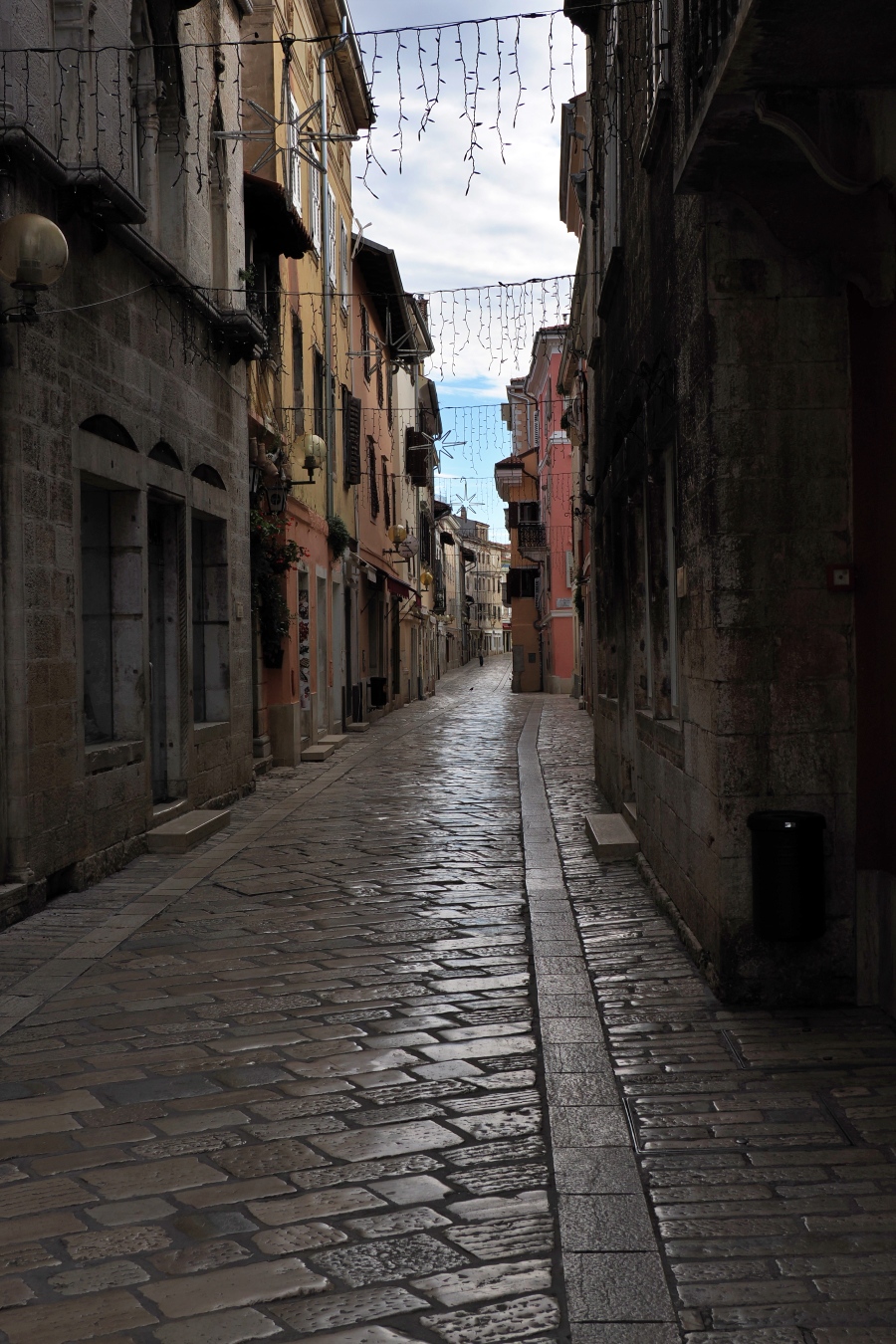
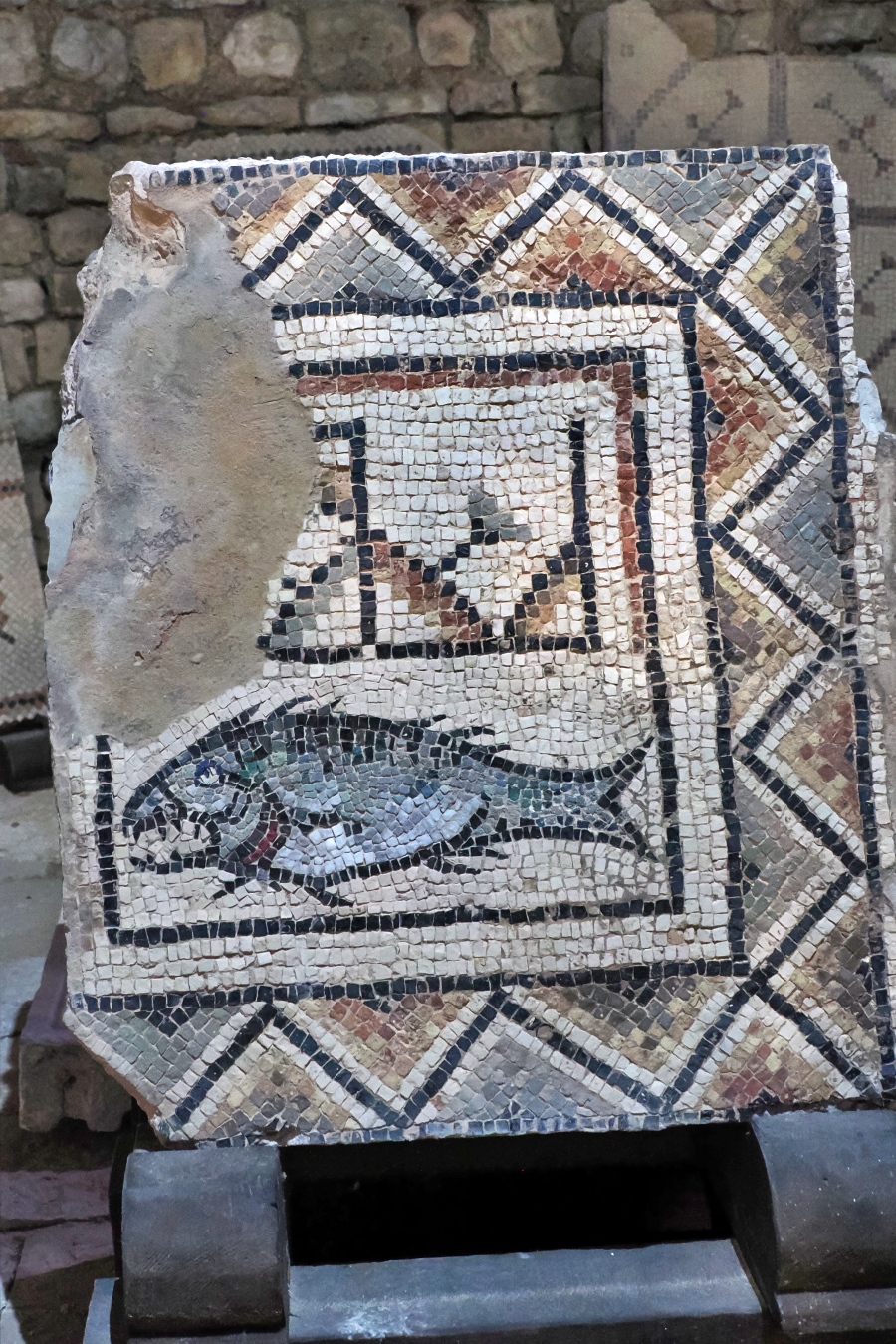
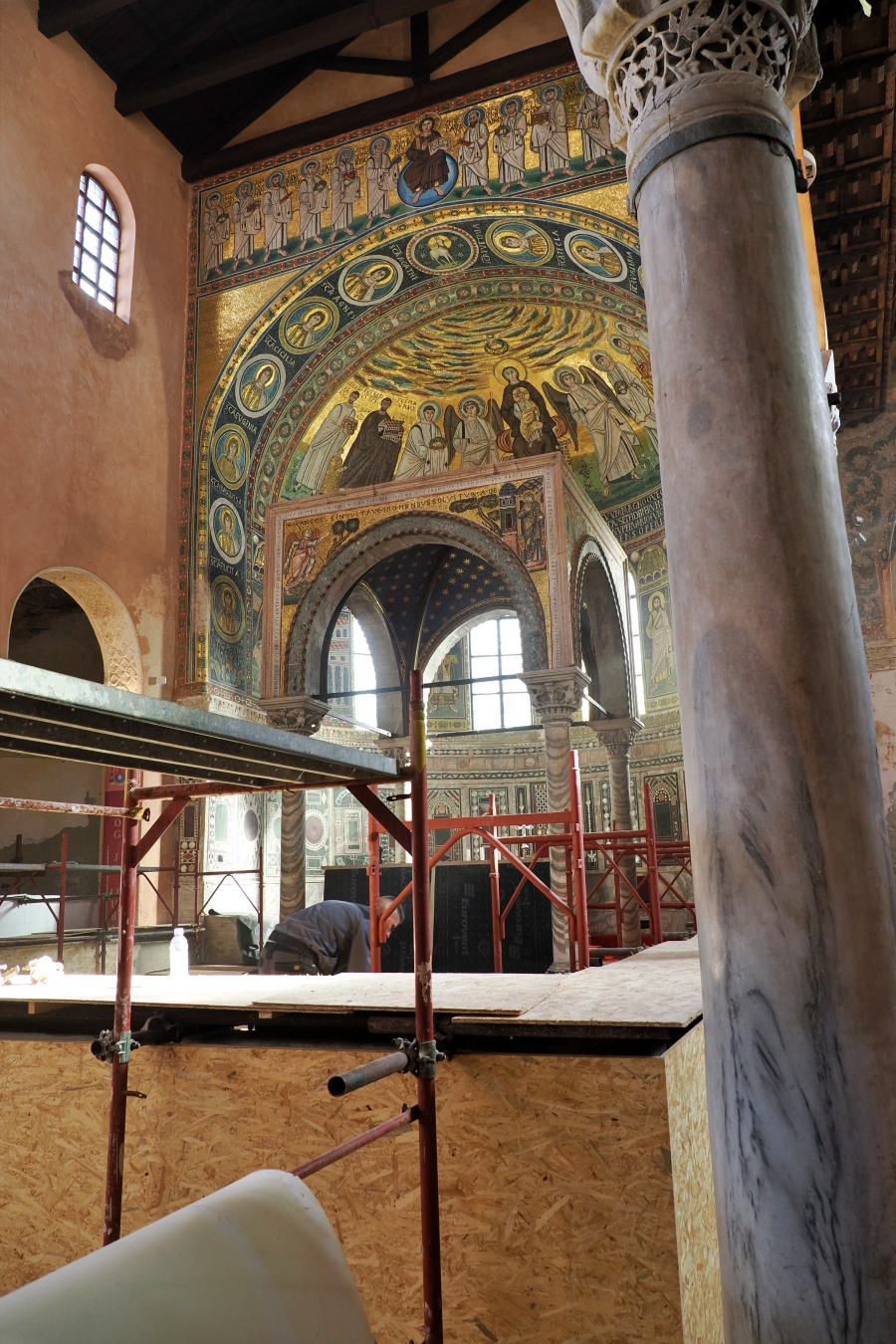
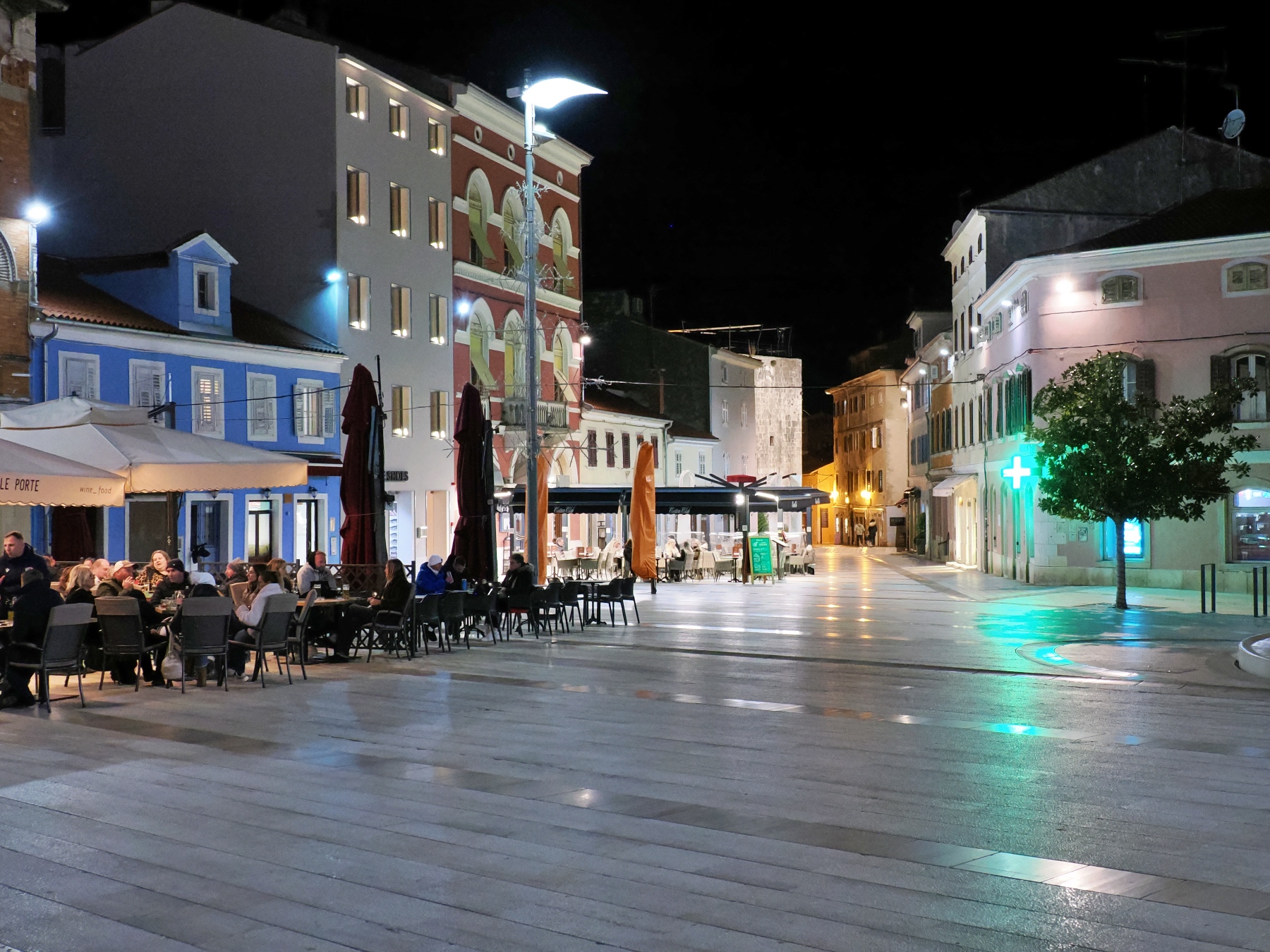
Wednesday was devoted to exploring the tourist highlights of Poreč’s old town, including the remains of Roman temples and a basilica complex where the earliest items came form teh 4th century. The town has a long history, and you don’t have to walk very far to stumble across another reminder of it.
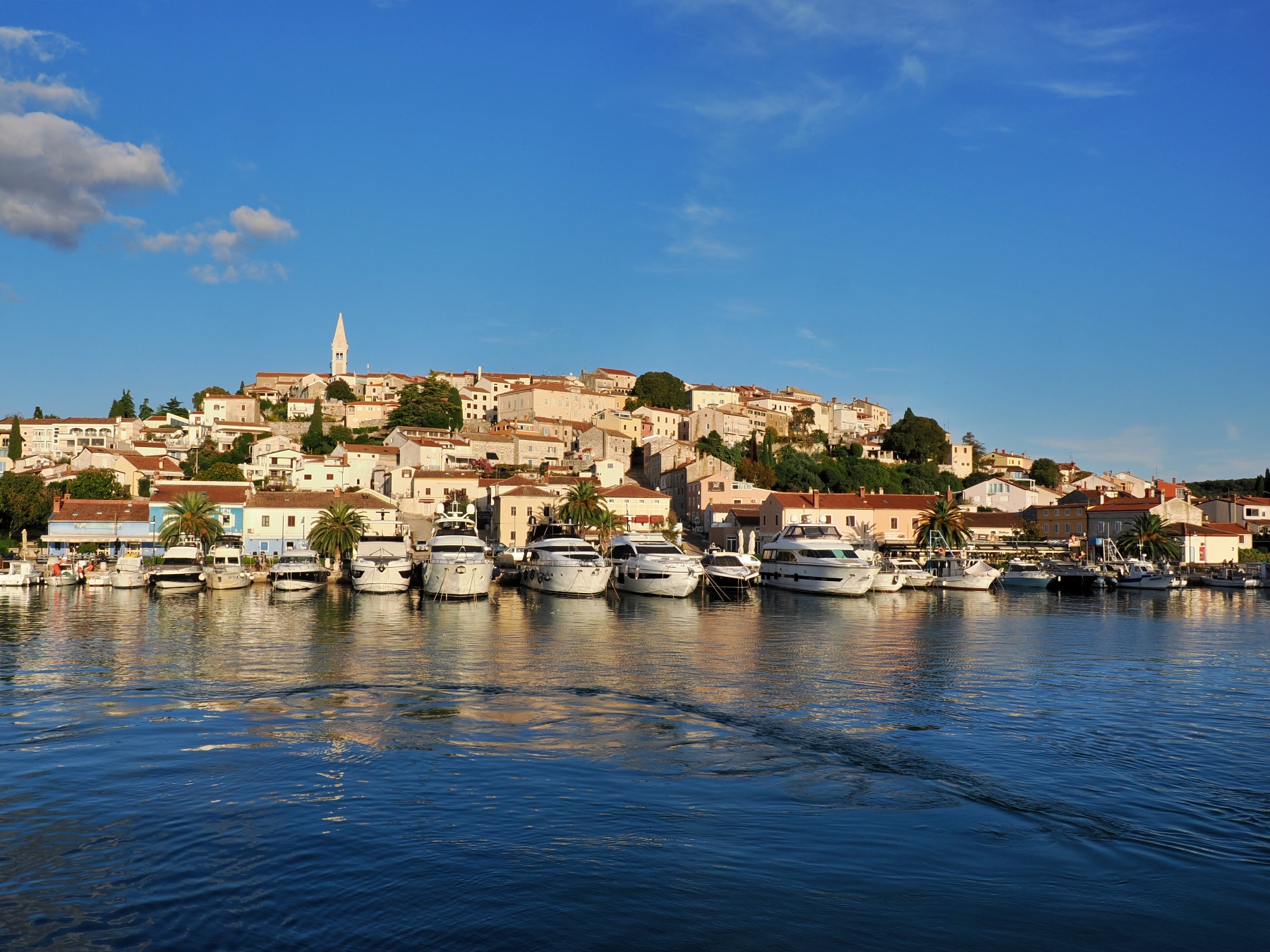
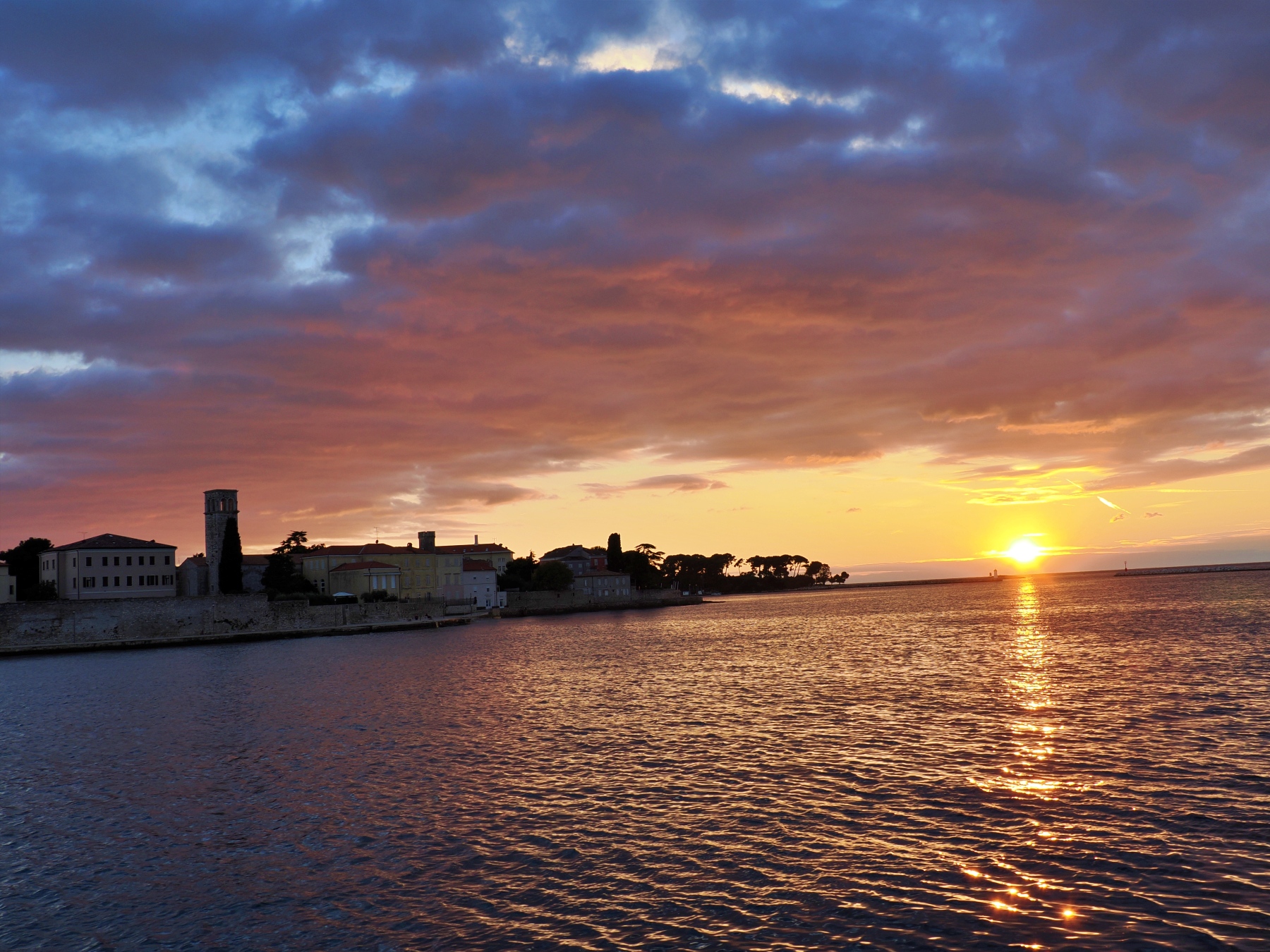
In the afternoon, we boarded a tour boat for a leisurely two-hour cruise along the coast to Vrsar, a picturesque hilltop town with a marina. We didn’t spot any dolphins, but the return trip offered a lovely sunset.
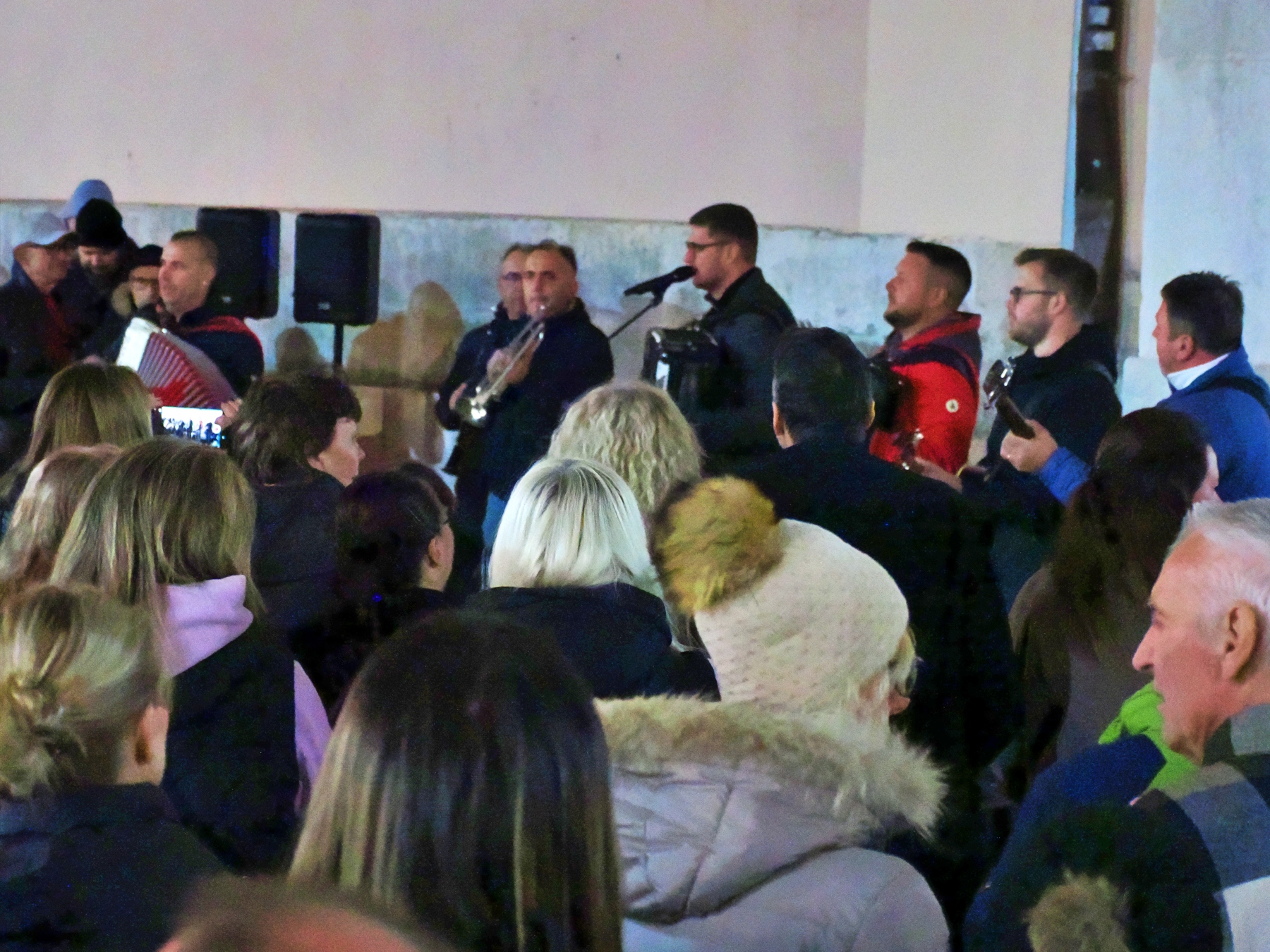
Wednesday evening turned out to be rather special. Our guide, Vlatka, heard about an impromptu celebration of the music of Mišo Kovač, one of Croatia’s most popular singers. His music has reportedly sold some 20 million records and cassettes, and his songs have accompanied generations of Croatians through communism, the war for independence and the difficult years of recovery that followed. He lived near Split and was a passionate supporter of the city’s soccer team. A much larger celebration of his life had taken place at the soccer stadium in Split, where some 20,000 fans gathered to sing his songs. Something much smaller, but every bit as enthusiastic, was happening in Poreč. After dinner, we joined a few hundred locals gathered in an open area, singing along with seven musicians. The crowd ranged from young to old. There was no need for song sheets, lyrics on a screen or much encouragement from the musicians. The crowd knew the words and sang along. It was a lovely glimpse into Croatia and the affection people have for their culture. We were outsiders, of course, but it was hard not to get caught up in the atmosphere.
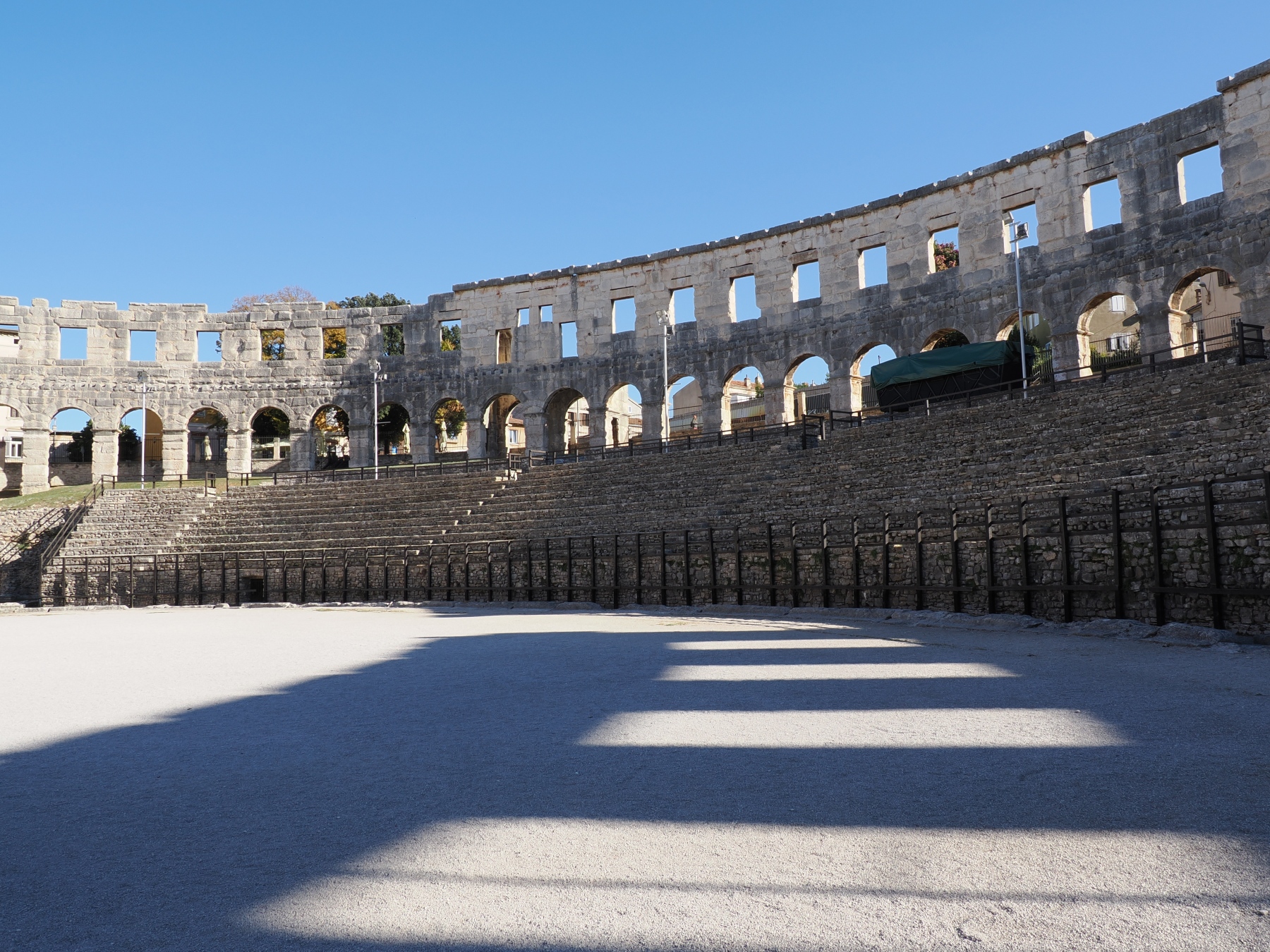
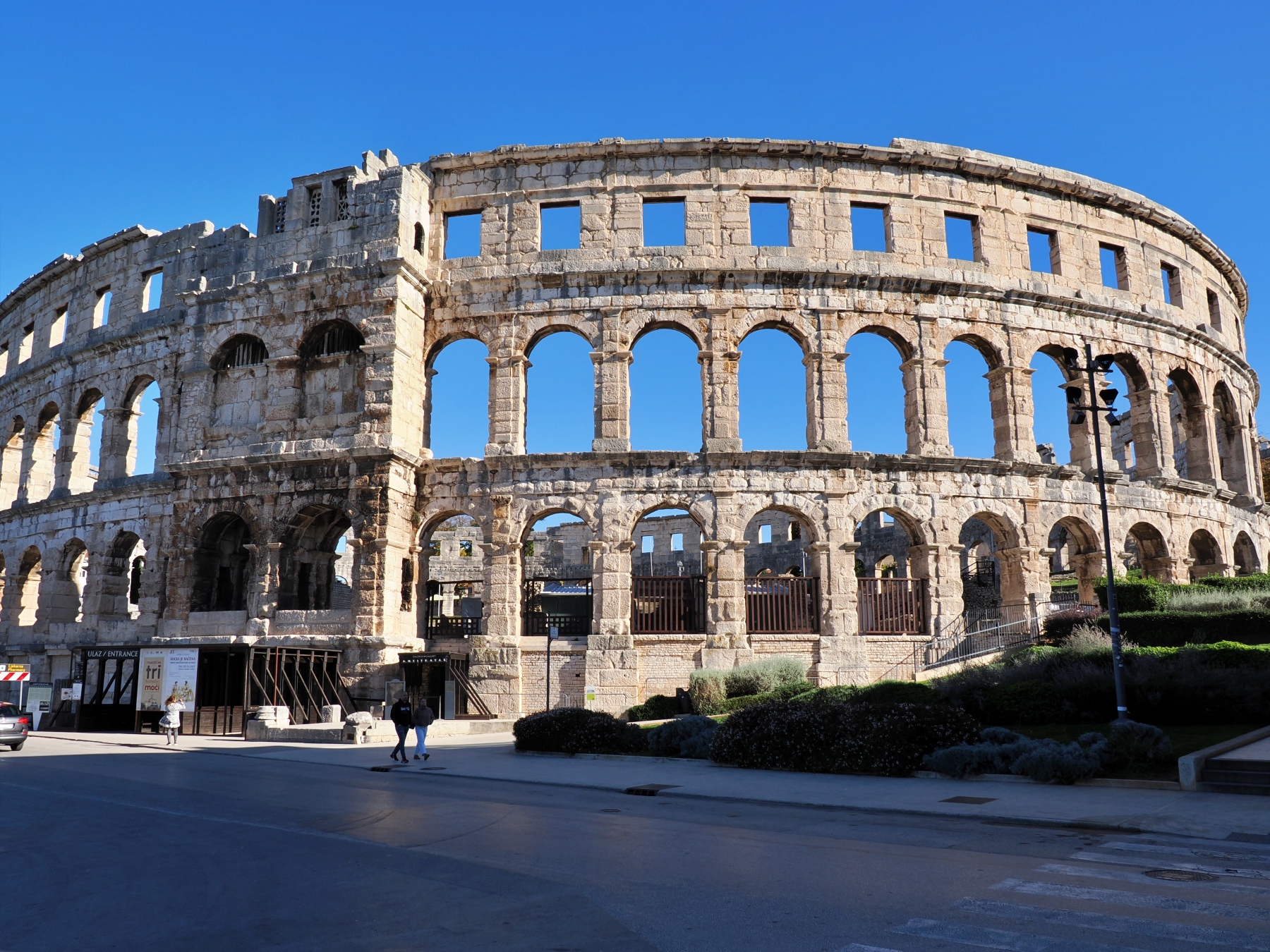
Thursday took us by bus to Pula, where the main attraction is its enormous Roman amphitheatre. Completed around 80 AD, it was used for the gladiatorial contests and public spectacles that entertained Roman audiences. It’s remarkably well preserved and impressive in scale. These days, rather than gladiators, it hosts concerts and other performances. Our guide had seen Sting perform there, and Tom Jones has also played the venue in recent years. twice , as well as Luciano Pavarotti. Quite a change of entertainment over the past 2,000 years!
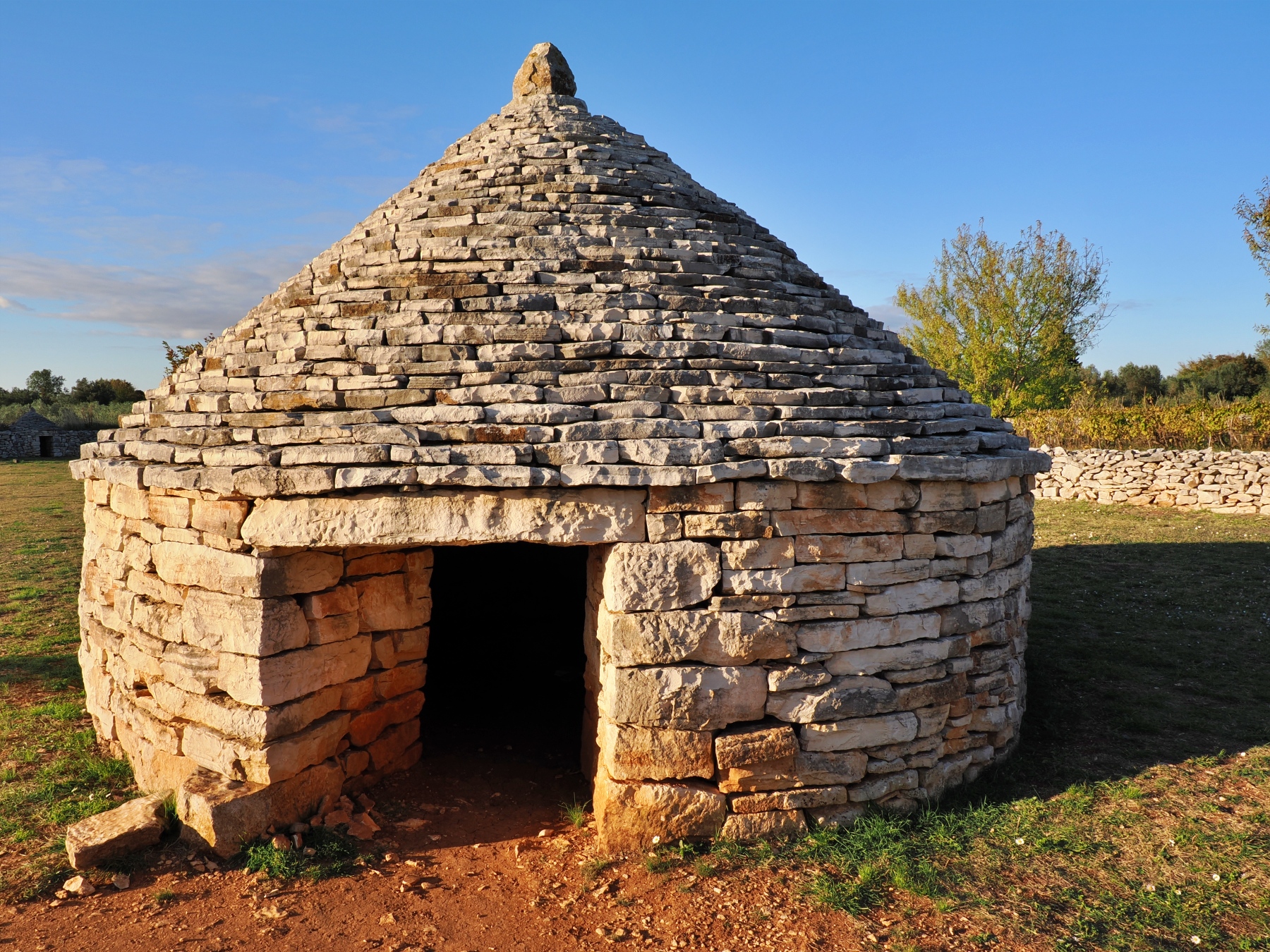
On the way back, we stopped to see a kažun, a small traditional stone shelter used by shepherds and farmers to escape bad weather and store their tools. These little buildings are constructed entirely from dry-stacked stone, without mortar. Even the roof is built from stone, using successive rings that gradually project farther inward until they meet at the top. A final capstone completes the structure.
The technique is somewhat reminiscent of the construction of Rome’s Pantheon, although on a more modest scale! It’s remarkable that these simple little shelters could be built entirely from local stone, without mortar or modern tools, and still stand today. Our guide said that stone masons learn the same techniques today during their apprenticeship.
We have a couple of days to go. More text soon