Poreč and area
3 Nov –8 Nov 2026
Istria is a peninsula in the northern Adriatic, at the top of the Croatian coast, bordering Slovenia and very close to Italy. Today, most of the peninsula belongs to Croatia, with a small portion in Slovenia and a sliver in Italy. It has a distinctly Mediterranean feel, with pretty coastal towns, medieval hilltop villages, vineyards and olive groves. But its location has also made it a crossroads of cultures and a rather complicated piece of European history.
Over the centuries, Istria has changed hands many times. It was originally settled by the Histri, an ancient people, before becoming part of the Roman Empire. After the fall of Rome, it passed through various rulers before coming largely under Venetian control for several centuries. That legacy is still very visible in the architecture, food and Italian influence in the towns along the coast.
Following the fall of Venice, Istria became part of the Habsburg Empire, later Austria-Hungary. After the First World War, it was awarded to Italy. Following the Second World War, most of Istria became part of Yugoslavia, and when Yugoslavia broke apart in the early 1990s, it became part of independent Croatia, while smaller sections remained in Slovenia and Italy.
This history helps explain why Istria feels a little different from the rest of Croatia. Its architecture, food, language and even its olive oil & wine traditions reflect a blend of Italian, Slavic and Central European influences.
For our visit to Istria, we travelled from Ljubljana to Poreč, where we will spend the next five days based in one hotel while exploring the west coast of Istria by bus. A welcome change from packing and unpacking every day!
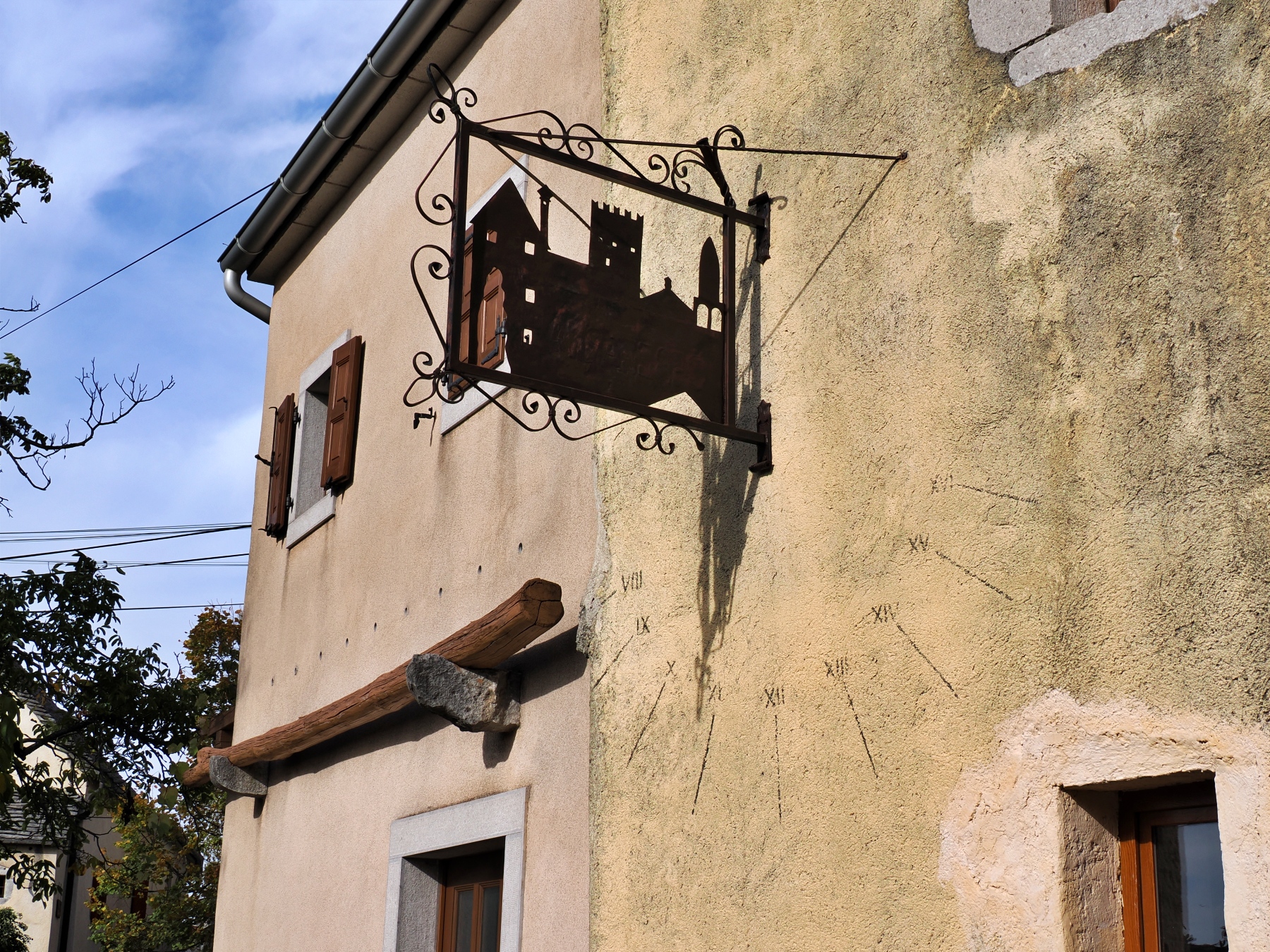
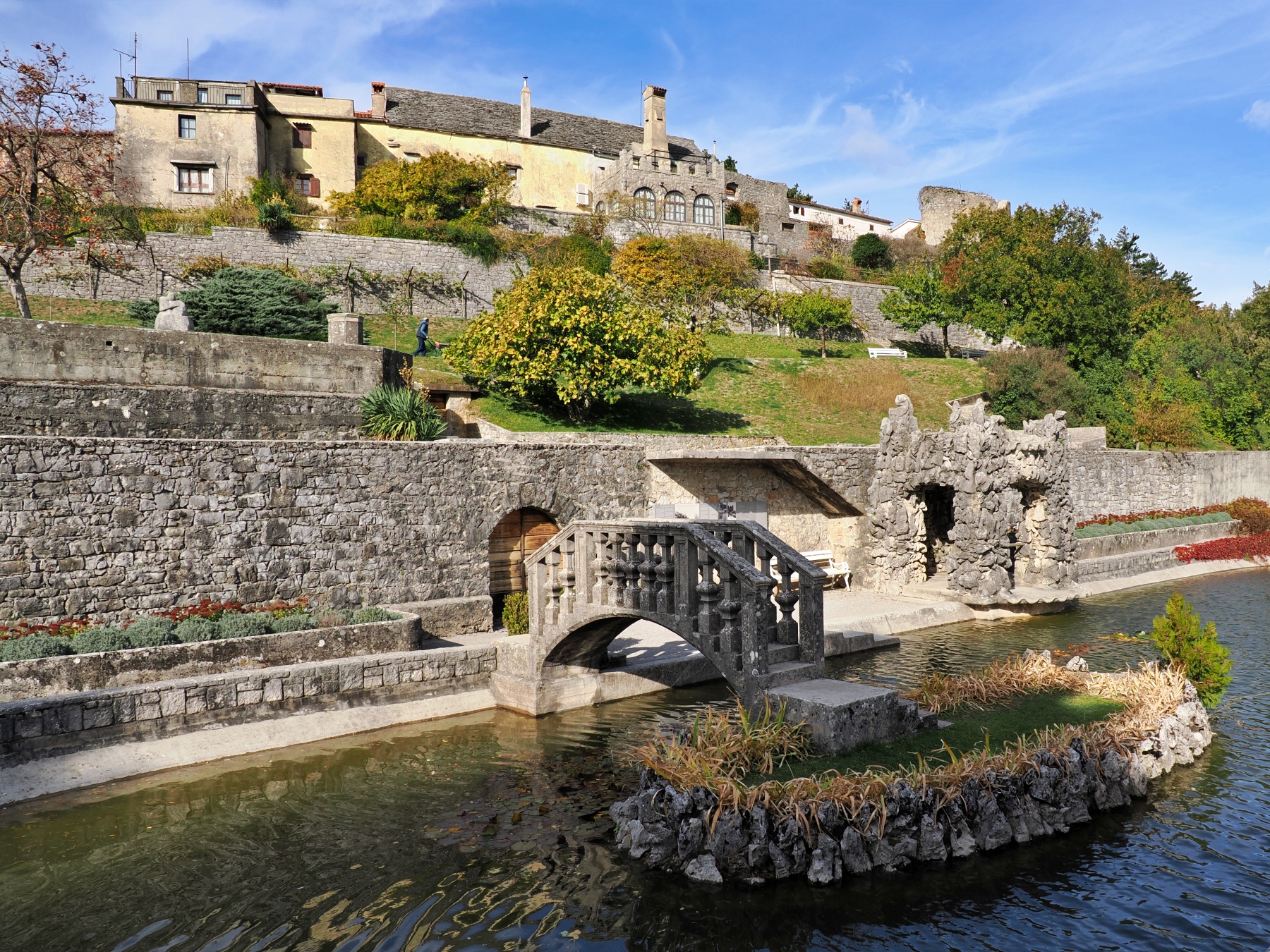
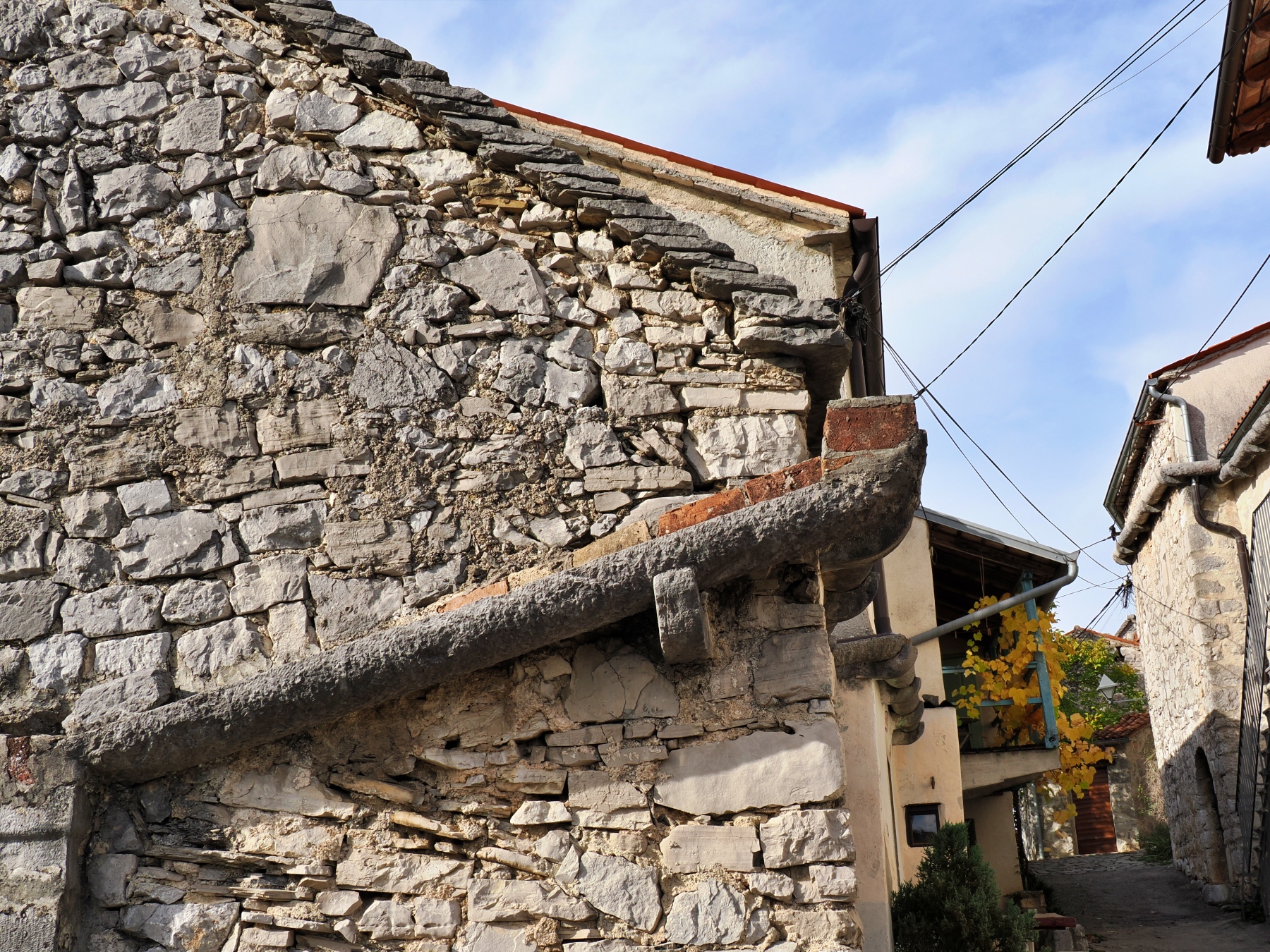
Our first stop along the way from Ljubljana was the small medieval hilltop town of Štanjel (St. Daniel -Š is a ‘sh’ sound. ). It’s a charming old stone village, best known for its Ferrari Gardens (no relation to Enzo), the various sculptures left by the small artist community that occupied the town after the Second World War, and, somewhat less conventionally, the stone eavestroughs and downspouts on one of the buildings.
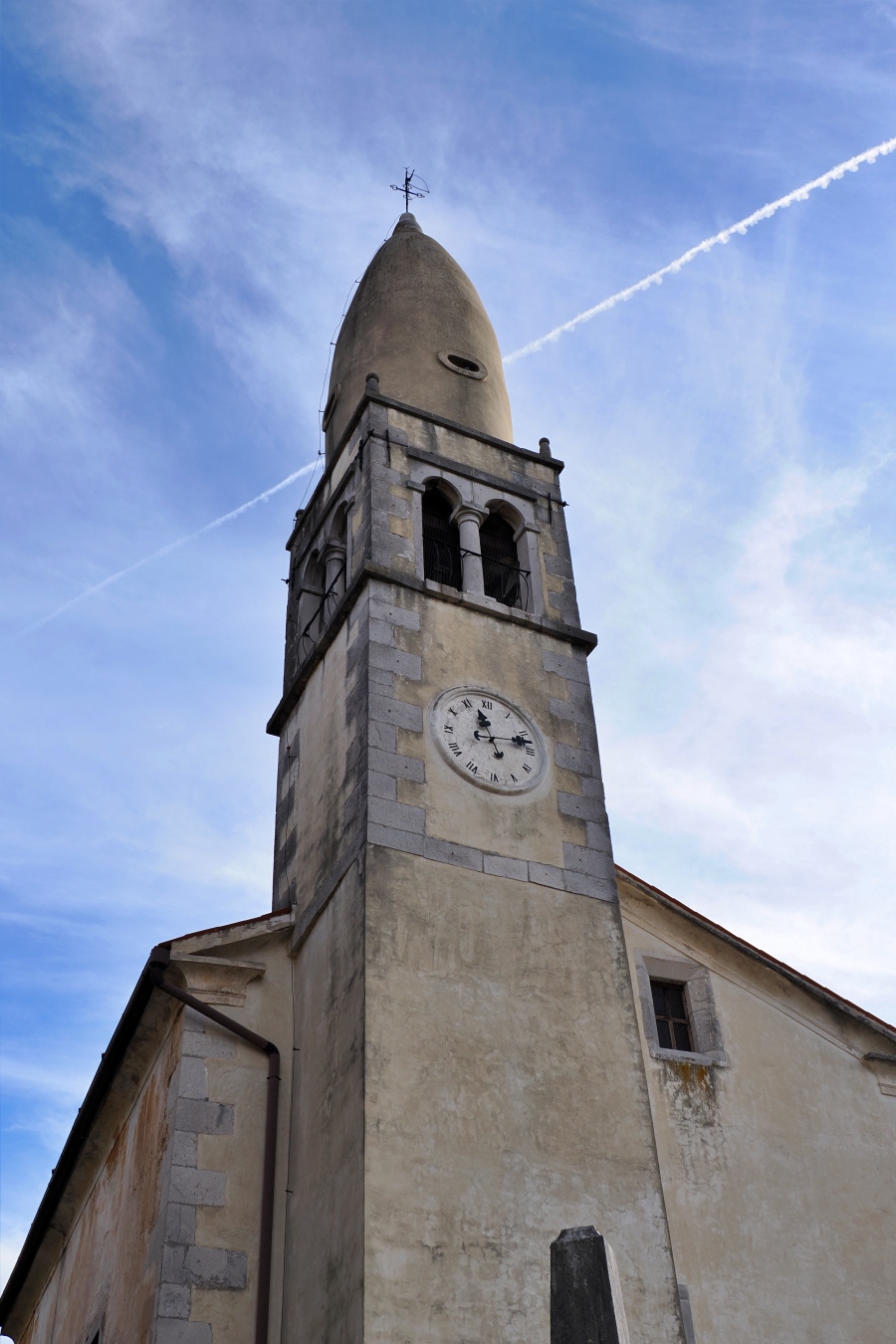
Much of the Balkans is notorious for the Bura, a powerful, cold northeasterly wind that sweeps down from the mountains. We didn’t need much of an explanation of what that meant because we got a demonstration in Štanjel. Wow, was it windy! There are several theories about why the village church steeple was rebuilt in the 1600s with its distinctive lemon-shaped top. One theory is that the unusual shape was designed to offer less resistance to the wind. That seems entirely reasonable, particularly after experiencing the Bura firsthand.
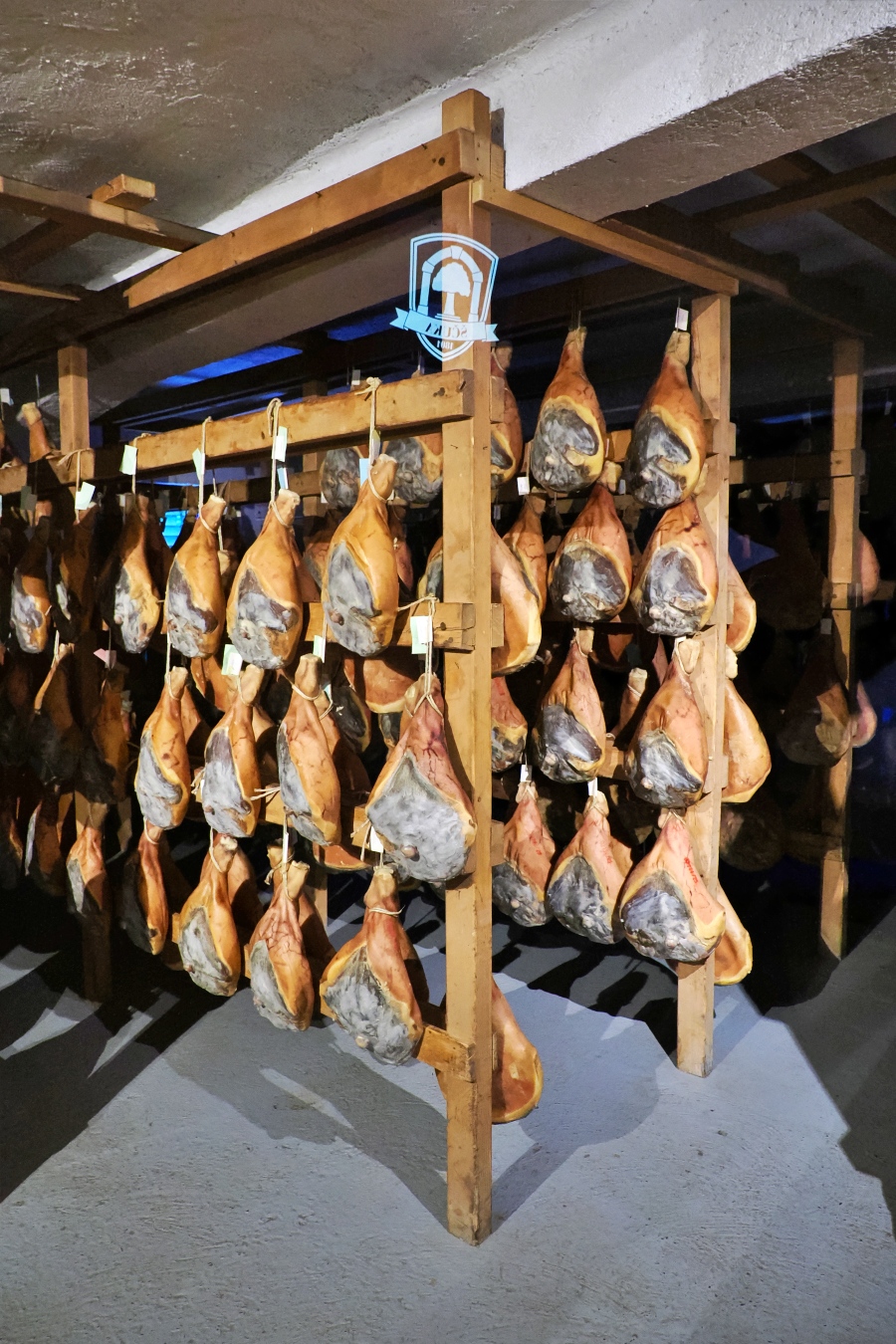
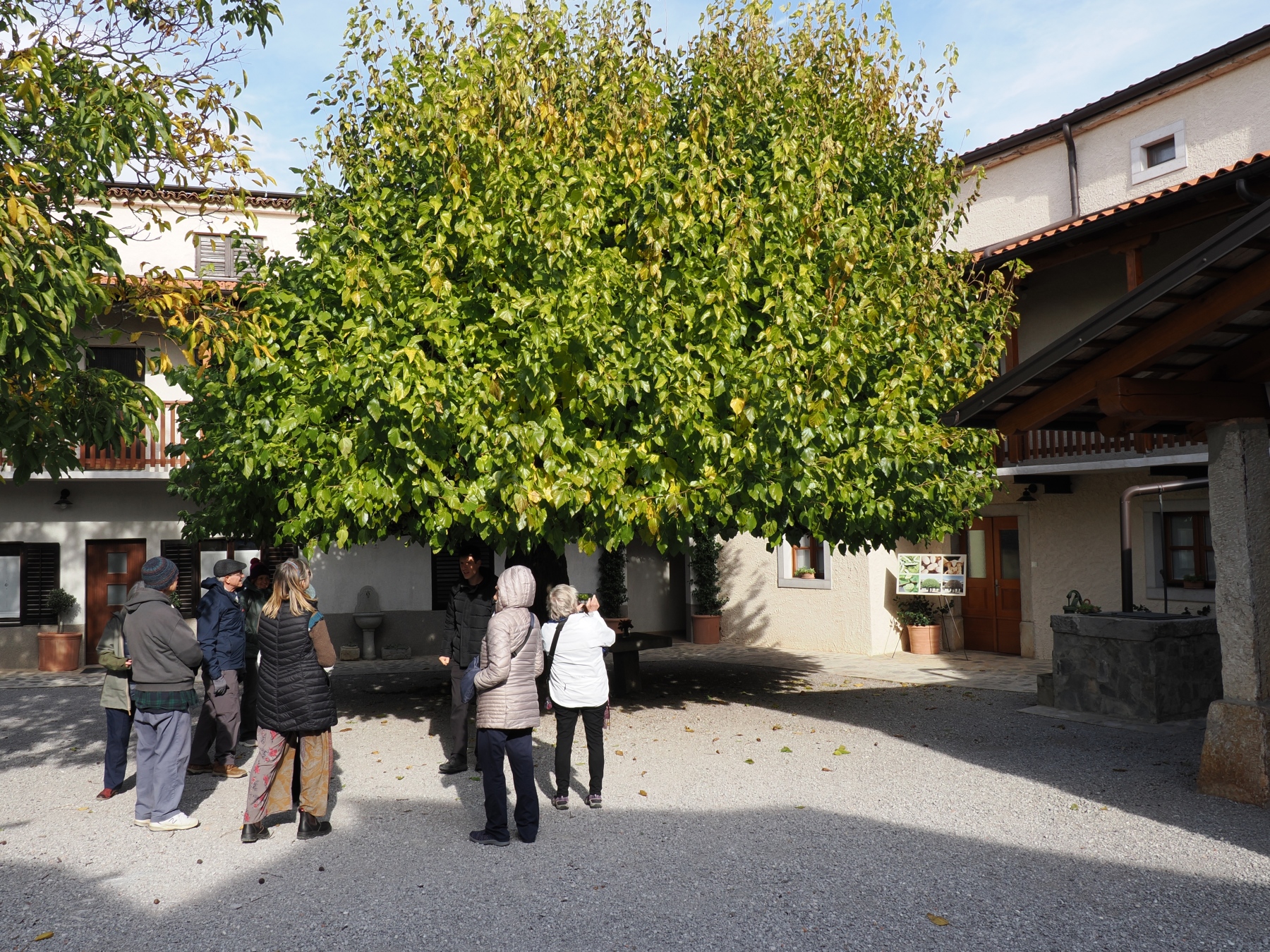
From Štanjel, we continued to a nearby prosciutteria operated by the Ščuka family, where we learned something about the traditional production of Istrian prosciutto. Depending on the size of the leg, the ham is salted, cured and then dried (in the Bura wind!) for one, two or even three years. By the time it’s ready, it has lost approximately 35% of its original weight.
Naturally, the visit concluded with lunch. We sampled prosciutto of different ages, accompanied by olives, local cheeses and fresh bread, all washed down with Teran, the region’s distinctive red wine.
Dinner was at Konoba Monika. A konoba is a traditional, often family-run restaurant. I couldn’t tell much about the building because it was dark and we arrived by bus, but it was very small and seemed to be little more than a house in a residential neighbourhood. We had ox goulash, apparently a local delicacy, and pasta with truffle sauce. Excellent!
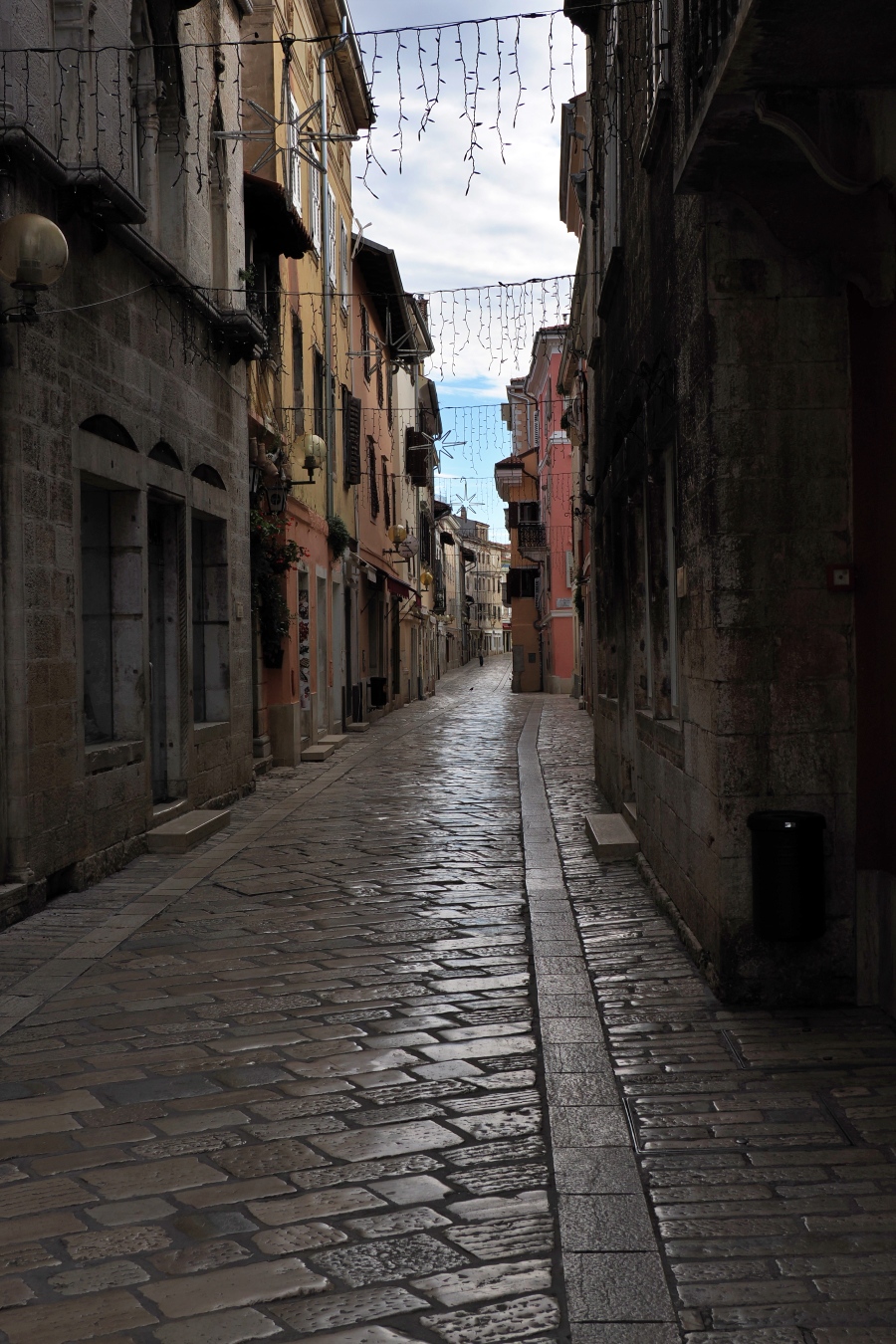
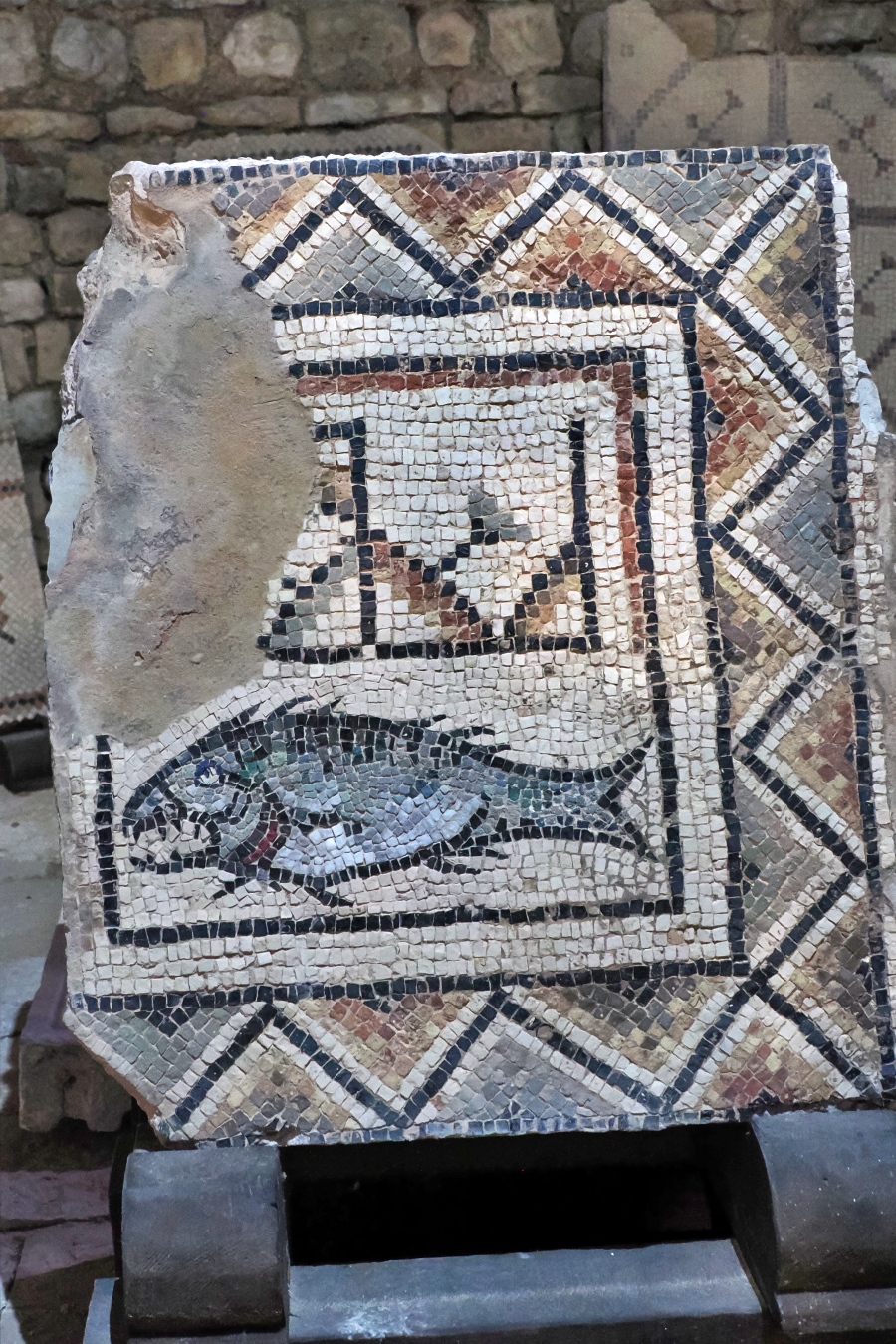
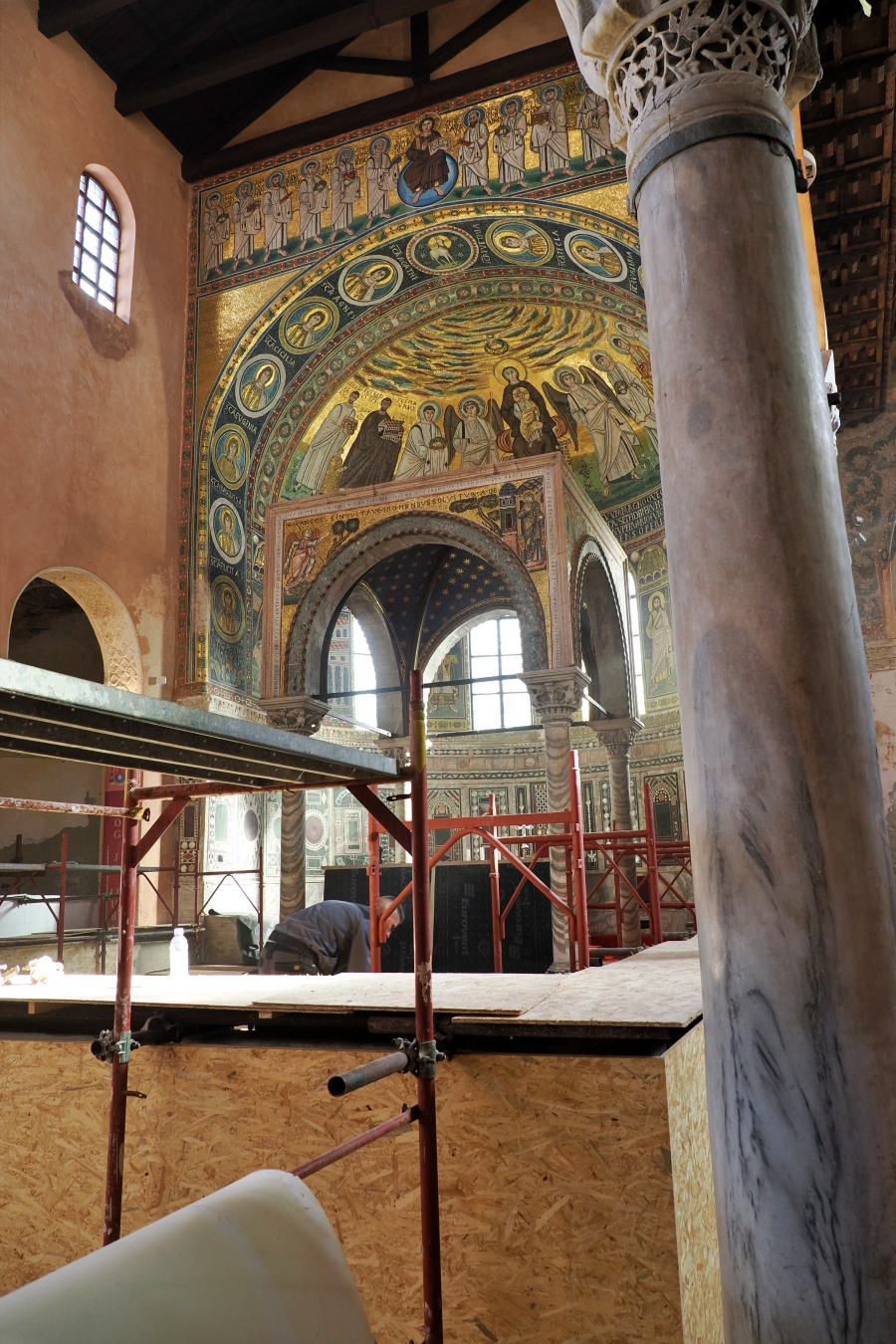
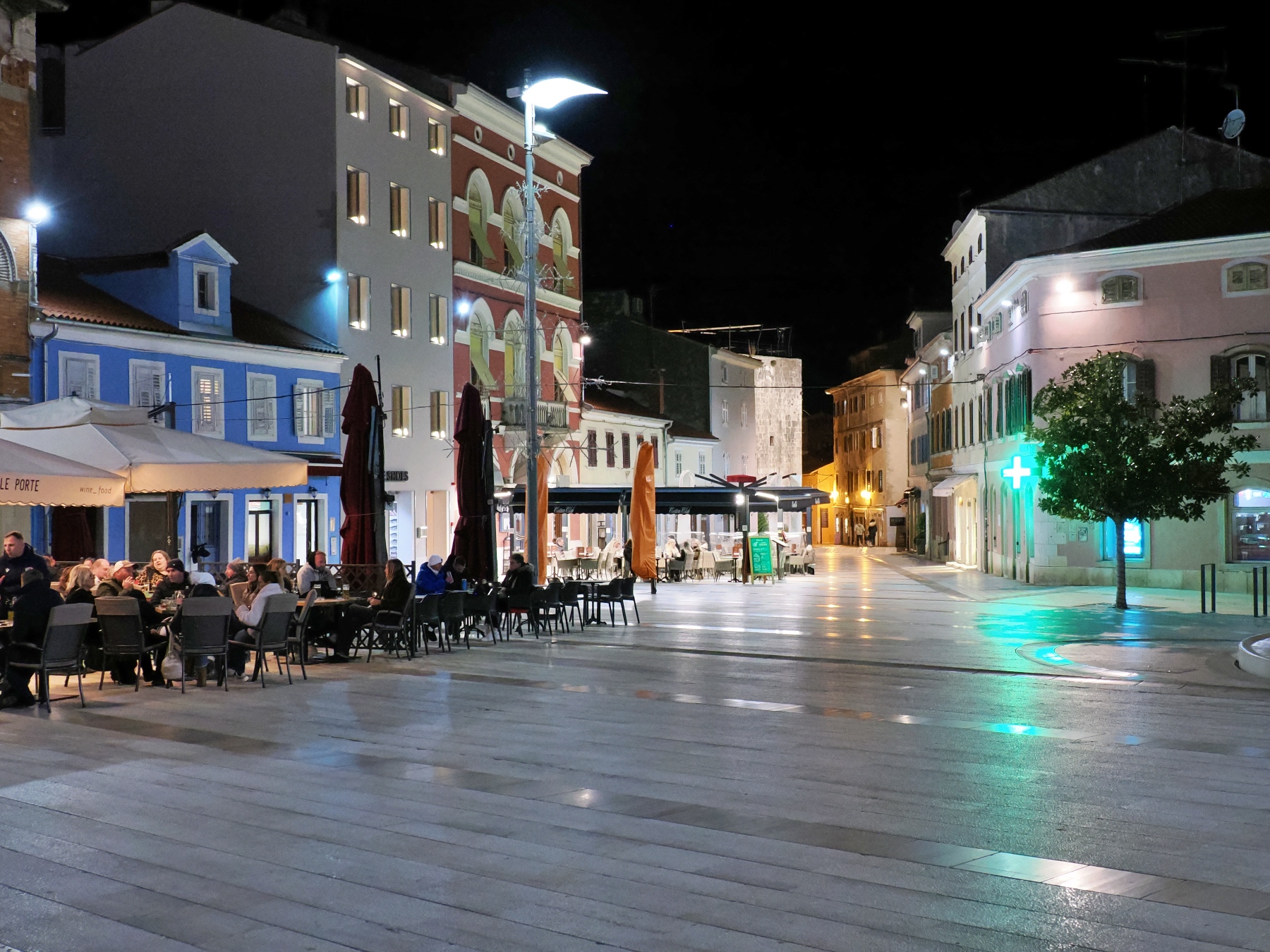
Wednesday was devoted to exploring the tourist highlights of Poreč’s old town, including the remains of Roman temples and a basilica complex where the earliest items came form teh 4th century.
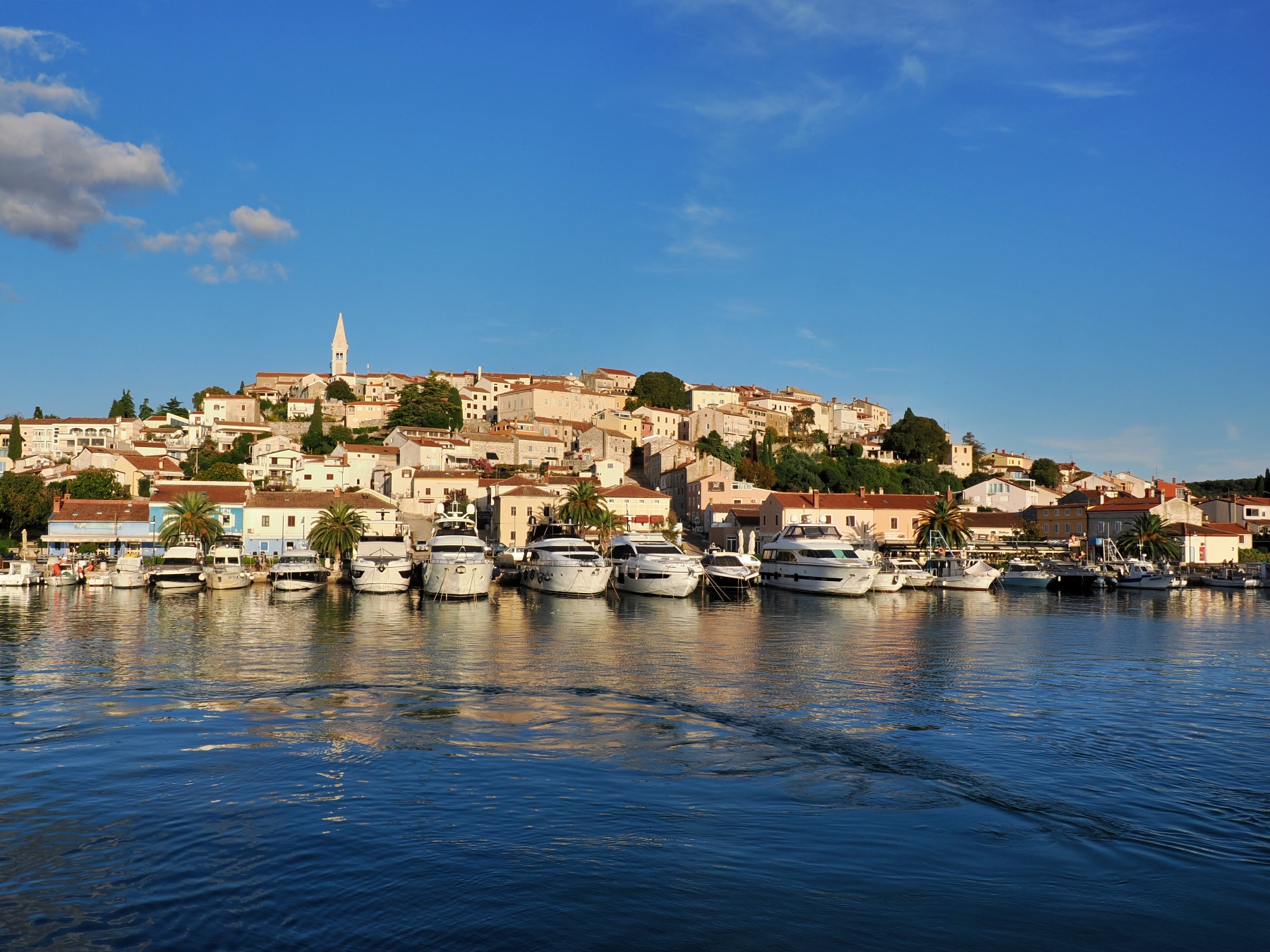
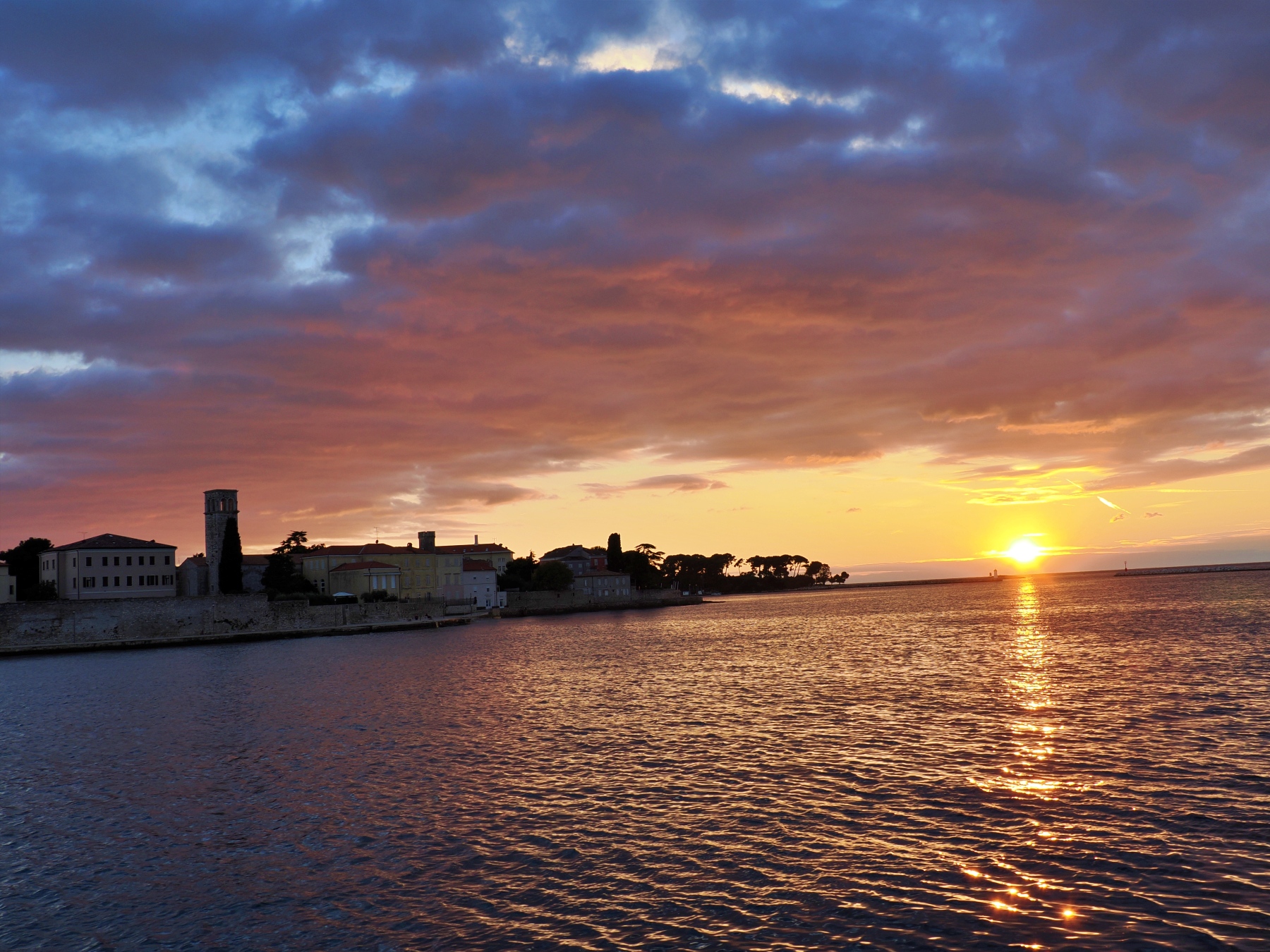
In the afternoon, we boarded a tour boat for a leisurely two-hour cruise along the coast to Vrsar, a picturesque hilltop town with a marina. We didn’t spot any dolphins, but the return trip offered a lovely sunset.
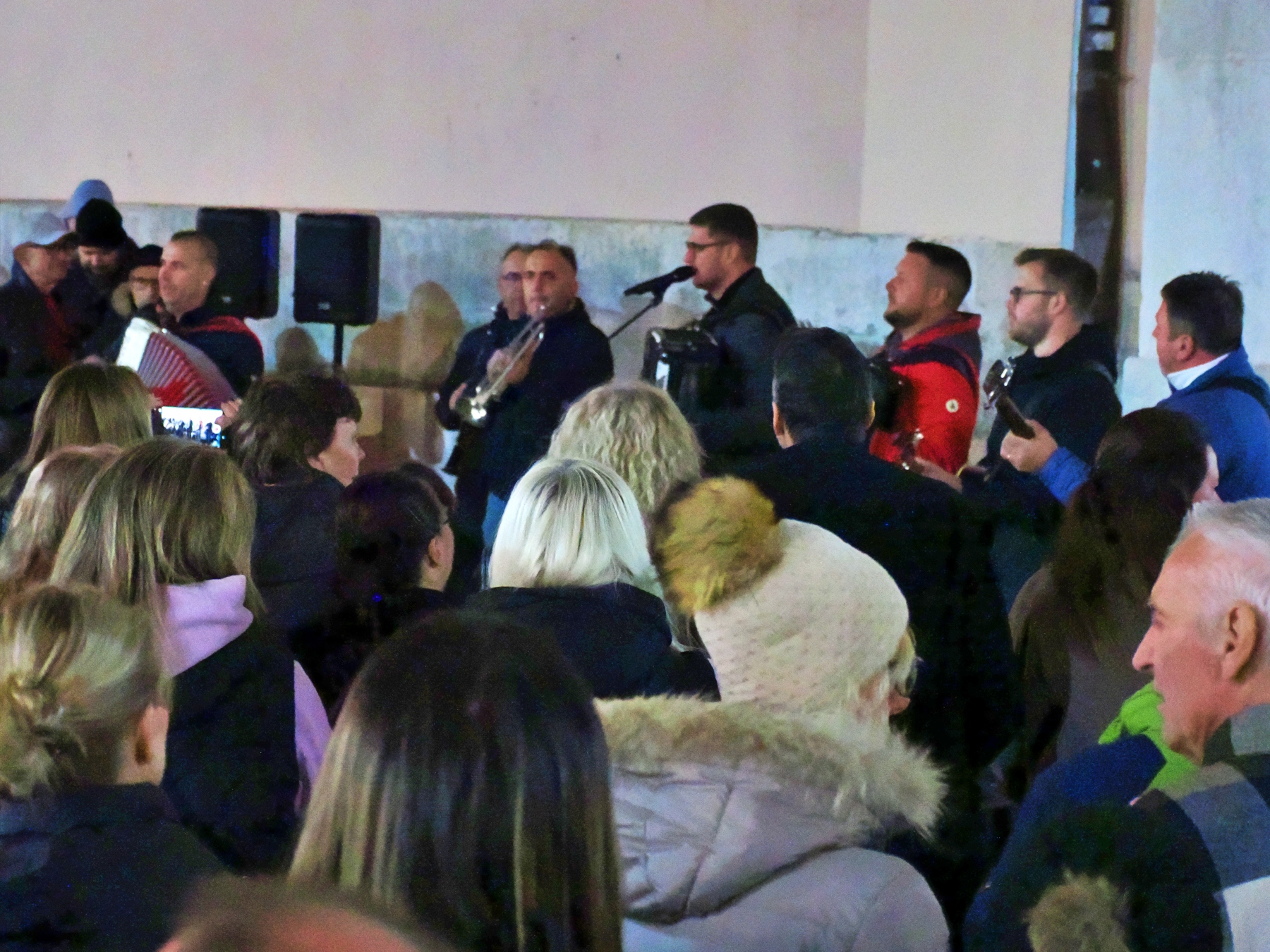
Wednesday evening turned out to be rather special. Our guide, Vlatka, heard about an impromptu celebration of the music of Mišo Kovač, one of Croatia’s most popular singers. His music has reportedly sold some 20 million records and cassettes, and his songs have accompanied generations of Croatians through communism, the war for independence and the difficult years of recovery that followed. He lived near Split and was a passionate supporter of the city’s soccer team. A much larger celebration of his life had taken place at the soccer stadium in Split, where some 20,000 fans gathered to sing his songs. Something much smaller, but every bit as enthusiastic, was happening in Poreč. After dinner, we joined a few hundred locals gathered in an open area, singing along with seven musicians. The crowd ranged from young to old. There was no need for song sheets, lyrics on a screen or much encouragement from the musicians. The crowd knew the words and sang along. It was a lovely glimpse into Croatia and the affection people have for their culture. We were outsiders, of course, but it was hard not to get caught up in the atmosphere.
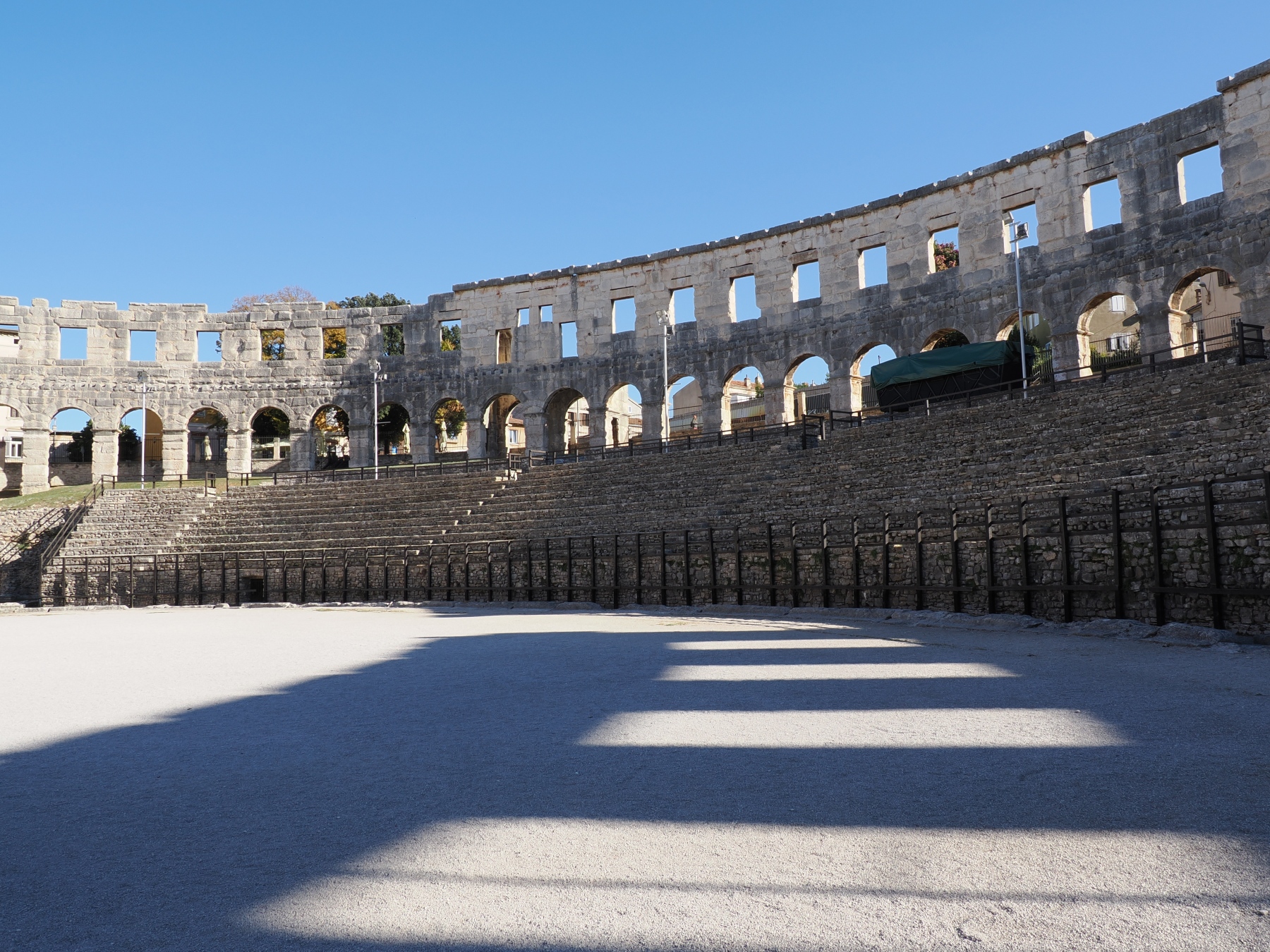
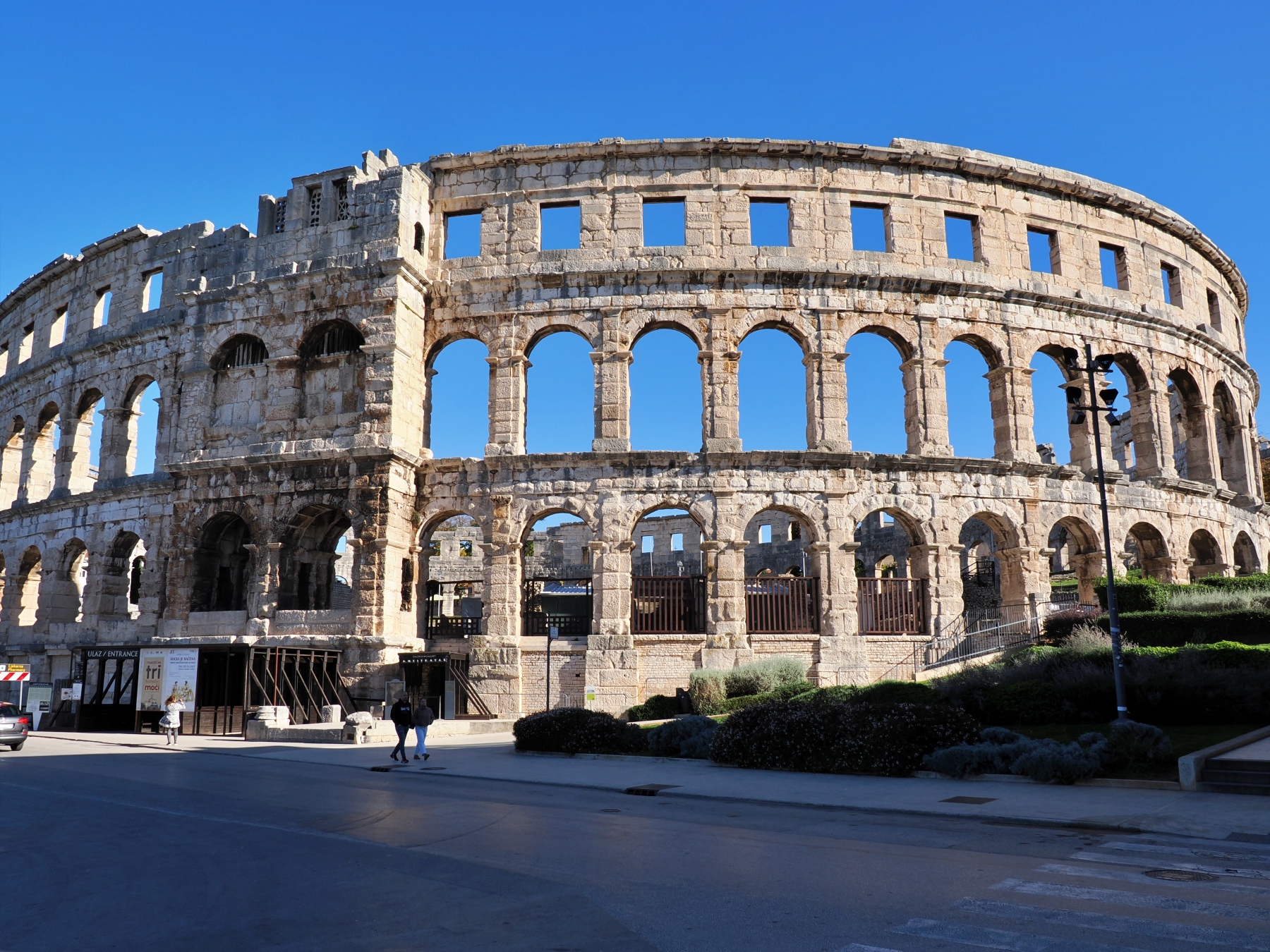
Thursday took us by bus to Pula, where the main attraction is its enormous Roman amphitheatre. Completed around 80 AD, it was used for the gladiatorial contests and public spectacles that entertained Roman audiences. It’s remarkably well preserved and impressive in scale. These days, rather than gladiators, it hosts concerts and other performances. Our guide had seen Sting perform there, and Tom Jones has also played the venue in recent years. twice , as well as Luciano Pavarotti. Quite a change of entertainment over the past 2,000 years!
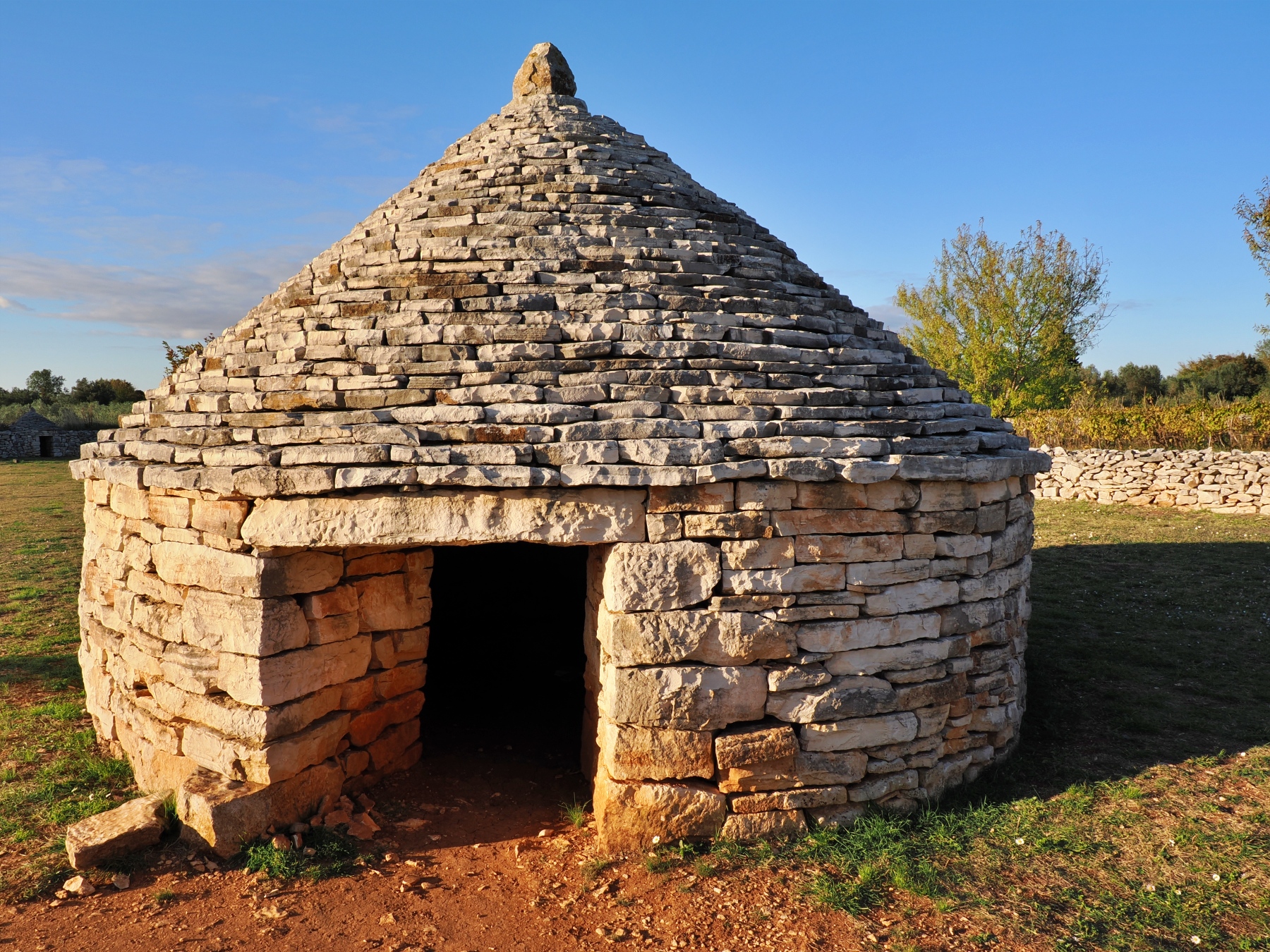
On the way back, we stopped to see a kažun, a small traditional stone shelter used by shepherds and farmers to escape bad weather and store their tools. These little buildings are constructed entirely from dry-stacked stone, without mortar. Even the roof is built from stone, using successive rings that gradually project farther inward until they meet at the top. A final capstone completes the structure.
The technique is somewhat reminiscent of the construction of Rome’s Pantheon, although on a more modest scale! It’s remarkable that these simple little shelters could be built entirely from local stone, without mortar or modern tools, and still stand today. Our guide said that stone masons learn the same techniques today during their apprenticeship.
On Friday, we took the bus to Rovinj, another beautiful seaside hill town, with a large church perched at the top overlooking the town and the Adriatic. Unlike Poreč, Rovinj was bustling with activity. The shops and restaurants were open, and there were considerably more people wandering the narrow streets. It had a much livelier atmosphere.
On the way home, we stopped at Cattunar Winery for their “Four Soils Experience.” The Istrian Malvasia grape is grown in four different types of soil in this region whose colour (red, white, grey and black) is determined by the mineral composition and organic matter content. The idea is that the soil gives the white wine a different character, even though the grape variety is the same.
We sampled a blend as well as a 100% black-earth Malvasia, and the differences were quite noticeable. Even to me. We also tried their Teran red wine, a Muscat rosé dessert wine, and finally a rakija, a brandy made from Malvasia grapes.
On our last day in Istria, we visited Bale and toured a local olive oil producer. Olive oil is a big deal in this part of Croatia. There is an international olive oil competition in Rome, and this particular producer ranks among the world’s top 500, alongside another 70 or so Istrian producers. That’s quite an achievement for a region made up largely of small, independent operations using locally grown olives.
In fact, much of this oil probably never makes it beyond Europe, let alone to North America. We sampled several varieties and, to my surprise, I could actually taste the differences. I couldn’t honestly say that I preferred one over another, though. Apparently, my olive oil education is not complete.
One thing that surprised us was their rather dismissive attitude toward the term “extra virgin.” They felt it had become largely a marketing label, covering a fairly wide range of oils, rather than a useful indication of quality. Their emphasis was on the olives, the growing conditions, the harvesting and the production process.
While in Bale, we also stopped at the home and studio of Marija Peti-Božić, one of the Croatian artists whose work we had seen in the Museum of Naïve Art in Zagreb. The term “naïve art” simply refers to artists who have no formal artistic training; it isn’t meant as a criticism of their work. In fact the work is very interesting.
We were fortunate to see one of her paintings in progress. She was creating a landscape on glass. She first made a pencil sketch on paper to plan the composition, then put the glass on top of it and started painting the image on the glass in reverse order from a conventional painting. She started with the foreground details and worked progressively backwards, finishing with the background. All this because you will view the picture from the other side of the glass. Slightly mind-bending!
We also saw the park containing chain art of Dušan Džamonja. He was an architect and also a scupture who creted unique statues using nails and chains welded together. It’s easier to explain if you look at the picture in the slider below. He created all the sculpture during his lifetime, and opened his land into a park to allow free access. His kids still live in the house next door. As an architect, he designed the mosque in Rijeka, which is unlike any other mosque I have ever seen.
We’re on our way home now: Trieste to Rome to Paris. Overnight in Paris, then Paris to Calgary to the see the grandkids for overnight, and then home to Victoria. It’s been a long trip,
I’ve really enjoyed this trip. It’s not a safari or the Galapagos in terms of the experience, but the region has such a fascinating and often complicated history that I’d certainly recommend it. What really sets OAT apart from other tour companies, in our experience, is the Day in the Life activities, the willingness to tackle controversial topics, and the opportunities to participate, even in a small way, in everyday local life.
OAT also provided us with two excellent guides: one for Istria and another for the remainder of the trip.
Vlatka was extremely knowledgeable and very personable. She made a real effort to bring the group together. We played cards using an Italian 40-card deck, went out for several group dinners, stumbled into an impromptu sing-along, and even dropped in unannounced on a local naive artist. These little experiences added a lot to the trip and made it feel much more than a sightseeing tour checking off the list of churches, castles, temples and gardens.
Nikola was equally fascinating, although in a rather different way. He’s an artist, a cancer survivor, a former member of the national hockey team, a former session guitarist for the BBC, and holds a PhD in history. Quite a résumé! He was more like a very good university professor: incredibly knowledgeable, happy to answer any question, full of good jokes, perfect english, and always friendly and personable while we were touring. He had an extraordinary amount of knowledge to share.
The one difference was that Nikola tended to disappear in the evenings, whereas Vlatka was much more involved in the group’s social activities. We understand Nikola is dealing with some difficult personal circumstances, so perhaps this wasn’t typical of him. In any event, both guides contributed a great deal to making the trip memorable and I would highly recomend both of them.
We’ve decided to stay put for a while and have no immedate plans to travel. However, knowing us, this may change quickly . Stay tuned!